- 0
- 1,559 word
Explore the fiery 2026 Michigan Senate primary debate between Haley Stevens and Abdul El-Sayed. Dive into their clashes over AIPAC, policy, and electability.
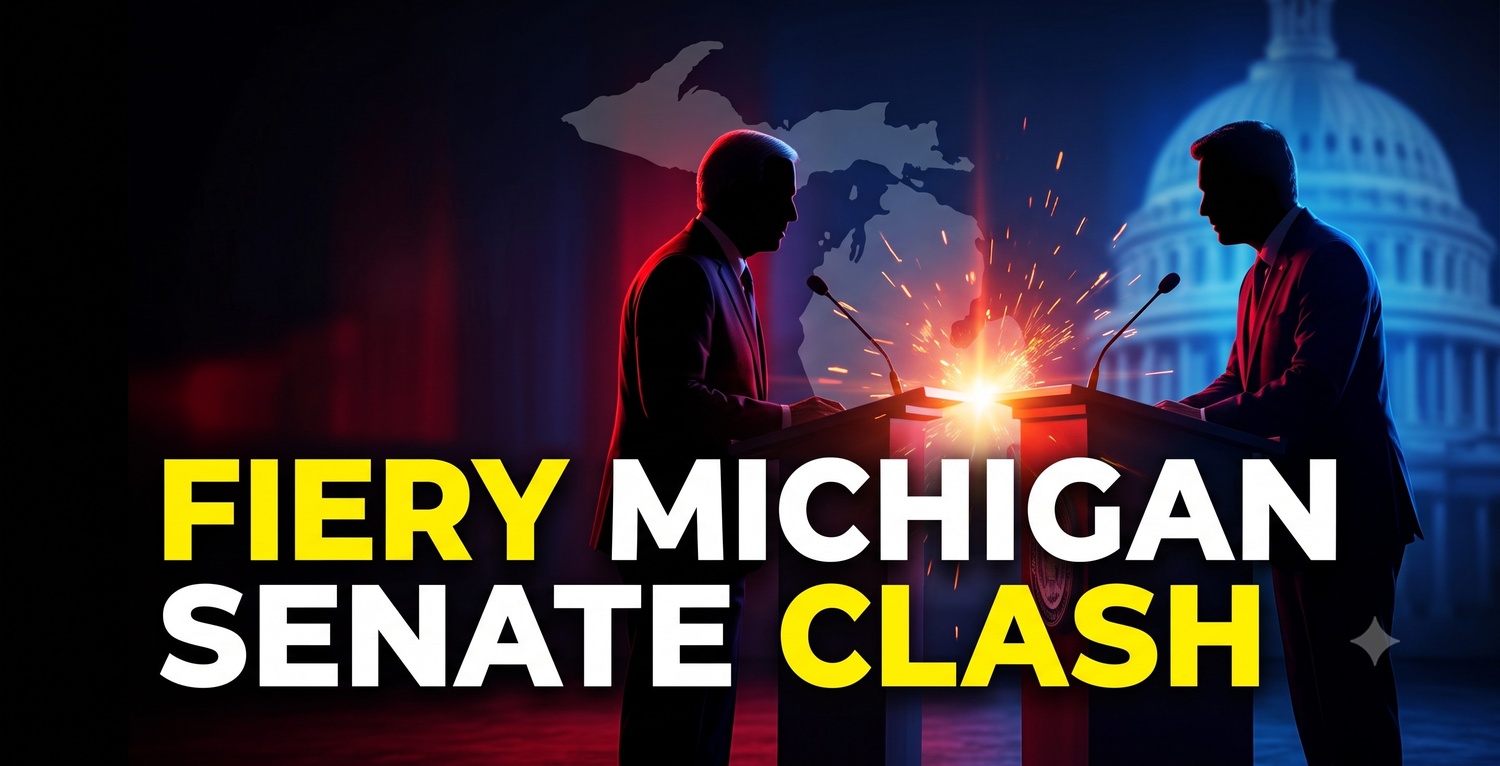
Haley Stevens and Abdul El-Sayed Clash in Fiery Michigan Senate Primary Debate
Michigan Democrats witnessed a stark ideological collision Monday night during the final Michigan Senate primary debate before the August 4 election. Representative Haley Stevens and progressive challenger Abdul El-Sayed traded pointed attacks over campaign finance, foreign policy, and electability in a contest that will shape the national battle for control of the U.S. Senate.
With control of the upper chamber hanging in the balance in 2026, the race to replace retiring Democratic Senator Gary Peters has become one of the nation’s most closely watched political battlegrounds. On Monday evening, broadcast on FOX 2 Detroit, the two leading Democratic contenders delivered their closing arguments directly to voters.
The televised debate showcased the deep divides within the modern Democratic Party. Rep. Haley Stevens, a four-term congresswoman who built her brand by flipping a Republican-leaning district, pitched herself as a pragmatic, results-oriented lawmaker. Conversely, Dr. Abdul El-Sayed, a physician and former Wayne County public health director, positioned himself as an unapologetic progressive seeking to dismantle corporate influence and overhaul American foreign policy.
The winner of the August 4 primary will advance to face Republican former Rep. Mike Rogers in November.
Ideological Divides: Pragmatism vs. Structural Change
From the opening statements, the contrast in political philosophy was unmistakable. Stevens emphasized her legislative record, focusing on manufacturing, lowering everyday costs, and her proven ability to win over swing voters in a critical battleground state. She leaned into her reputation as a practical legislator.
El-Sayed framed his campaign as a necessary disruption to the political establishment. He championed Medicare for All, aggressive anti-monopoly policies, and a departure from traditional foreign policy norms.
The “Ogre on a Pike” Controversy Clarified
One of the most memorable—and unusual—moments of the night stemmed from leaked audio published earlier Monday by Politico. In a virtual donor call, El-Sayed was heard saying that a progressive victory in Michigan could help “put one ogre on a pike.” Many political insiders assumed the veiled attack was directed at his primary opponent, Stevens.
When pressed by debate moderator Roop Raj, El-Sayed clarified the target of his ire. He revealed he was actually referring to Pennsylvania Senator John Fetterman.
“I was referring to a guy named John Fetterman… who has done terrible things, got elected on a set of values, and is now completely throwing those values in the mud,” El-Sayed explained, critiquing Fetterman’s rightward shift on several key issues since taking office.
Stevens immediately capitalized on the explanation. After sarcastically thanking him for confirming she was not the “ogre,” she used the moment to characterize El-Sayed as a candidate obsessed with national progressive clout rather than local issues. “Michigan needs a workhorse,” Stevens argued, suggesting her opponent intended to use his first years in the Senate chasing national influence rather than drafting policy for Michiganders.
The Role of AIPAC and Campaign Finance
Money in politics dominated a significant portion of the Michigan Senate primary debate. El-Sayed aggressively targeted Stevens over the massive influx of outside spending supporting her campaign, specifically pointing to the American Israel Public Affairs Committee (AIPAC).
Clashing Over Israel Aid and PAC Money
Estimates suggest that AIPAC-linked super PACs and allied organizations have injected upwards of $25 million to $30 million into the race to support Stevens. El-Sayed framed this financial backing as transactional.
He pointed to Stevens’ recent legislative actions, specifically her vote against an amendment that would have restricted $3.3 billion in U.S. aid to Israel. “Just last week, our friend here voted to send 3.3 billion of your tax dollars to a foreign government. That is the pro quo that comes with a quid of $30 million spent by AIPAC,” El-Sayed charged.
Stevens vehemently denied the accusation that her votes are for sale, insisting that her sole motivation remains the voters of Michigan. She defended her foreign policy stance by advocating for a two-state solution and lasting peace for both Israelis and Palestinians. To counter El-Sayed’s narrative, she pointed out that current Israeli Prime Minister Benjamin Netanyahu has publicly criticized her by name in the past.
Furthermore, Stevens addressed the broader issue of campaign finance by highlighting that El-Sayed has benefited from more than $1 million in campaign spending courtesy of his father-in-law.
Policy Differences: Immigration and Corporate Influence
The candidates also clashed heavily on domestic policy, particularly immigration enforcement. While both Democrats heavily criticized the tactics utilized by Immigration and Customs Enforcement (ICE) during the Trump administration, their proposed solutions differed vastly.
- Abdul El-Sayed: Called for the complete abolition of ICE, arguing that partial reforms amount to “cowardice.”
- Haley Stevens: Advocated for comprehensive reform and oversight within Congress, stating she prefers doing the legislative work rather than “shouting into a bullhorn.”
Stevens attempted to paint El-Sayed as a “celebrity candidate,” referencing his books and public health podcasts. She argued that the U.S. Senate requires unglamorous, diligent work. El-Sayed countered seamlessly, inviting her to listen to his podcasts while pivoting back to the pressing economic anxieties of Michigan voters, such as the rising costs of gas and groceries.
Electability and the General Election Strategy
With the specter of Republican Mike Rogers waiting in the general election, electability became a central theme. Stevens frequently name-dropped popular Michigan Governor Gretchen Whitmer and reminded viewers that she successfully flipped a historically red congressional seat. She positioned herself as Michigan’s most effective Democratic lawmaker.
Republicans, including former President Donald Trump at a rally earlier that day, have already begun labeling the Democratic ticket as socialist. El-Sayed addressed this head-on during the debate.
“I’m not a socialist,” El-Sayed stated firmly. “I’m just a capitalist who understands how capitalism works.” He argued that corporate monopolies, rather than progressive economic policies, pose the most significant threat to the American working class.
Personal Attacks and the Tone of the Race
The bitter tone of the primary was palpable throughout the hour. Stevens stumbled slightly when questioned about political civility, choosing instead to pivot back to El-Sayed’s donor call. She also brought up AIPAC-funded advertisements that highlight past critical remarks El-Sayed allegedly made about prominent Democratic women, including Michelle Obama, Gov. Whitmer, and State Sen. Mallory McMorrow.
El-Sayed defended himself by noting he was raised by strong women and is raising two daughters. He urged his supporters to refrain from personal attacks and claimed the negative ads drastically distort his record.
Stevens also addressed personal grievances, mentioning online attacks that mock her voice and accent. She passionately defended herself, stating that her voice sounds exactly like the hardworking people she represents in Congress.
Timeline of the Michigan Senate Race
- Early 2025: Incumbent Democratic Sen. Gary Peters announces he will not seek reelection.
- Late 2025: Rep. Haley Stevens and Dr. Abdul El-Sayed officially launch their primary campaigns.
- July 27, 2026: Final televised Michigan Senate primary debate on FOX 2 Detroit.
- August 4, 2026: Michigan statewide primary election.
- November 3, 2026: General election against Republican Mike Rogers.
Impact on National Politics
The outcome of this primary will reverberate far beyond Michigan’s borders. The state is a critical piece of the “Blue Wall.” If Stevens wins, the Democratic Senatorial Campaign Committee (DSCC) will likely utilize a centrist playbook to defend the seat. If El-Sayed secures the nomination, it will signal a massive victory for the progressive wing, testing whether a bold, left-leaning platform can succeed in a purple Midwestern state during a high-stakes general election.
Future Developments
With just one week remaining until primary day on August 4, both campaigns are heavily invested in get-out-the-vote (GOTV) operations. Millions of dollars in last-minute advertising are expected to flood Detroit, Grand Rapids, and Lansing media markets. Political analysts will closely monitor internal polling to see if the fiery debate significantly swayed undecided voters.
Frequently Asked Questions
1. Who participated in the Michigan Senate primary debate? The debate featured the two leading Democratic candidates: Representative Haley Stevens, a moderate, and Dr. Abdul El-Sayed, a progressive physician.
2. When is the Michigan Senate primary election? The primary election is scheduled for Tuesday, August 4, 2026.
3. Who are the Democrats trying to replace in the Senate? They are running to fill the seat currently held by Democratic Senator Gary Peters, who announced his retirement.
4. What was the “ogre on a pike” comment about? Leaked audio captured Abdul El-Sayed mentioning putting an “ogre on a pike.” During the debate, he clarified he was criticizing Pennsylvania Senator John Fetterman for abandoning progressive values, not attacking his opponent, Haley Stevens.
5. How much money has AIPAC spent in this race? Estimates indicate that AIPAC-linked super PACs and outside groups have spent between $25 million and $30 million to support Haley Stevens’ campaign.
6. Who will the winner face in the general election? The winner of the Democratic primary will face Republican candidate and former Representative Mike Rogers in the November 2026 general election.
The final Michigan Senate primary debate offered voters a distinct choice. Representative Haley Stevens promises the steady hand of an experienced, moderate incumbent with a track record of winning tough races. Dr. Abdul El-Sayed offers a disruptive progressive vision focused on systemic reform and challenging corporate power. As Michigan Democrats head to the polls on August 4, their decision will not only determine the state’s next Senate candidate but also signal the ideological direction of the national Democratic Party heading into a consequential November election.
- Abdul El-Sayed
- AIPAC funding
- battleground states
- campaign finance
- Democratic primary
- Detroit news
- FOX 2 Detroit debate
- Gary Peters replacement
- Gretchen Whitmer
- Haley Stevens
- ICE reform
- John Fetterman ogre comment
- Medicare for All
- Michigan elections
- Michigan politics
- Michigan Senate primary debate
- Mike Rogers
- progressive Democrats
- Senate race 2026
- US Senate control
Author

admin@insiderglobal.news
Related Posts

California Passes AB 2624 Expanding Privacy for Immigration Providers
- 0
- 1,290 word
California legislature passes AB 2624, extending Safe at Home protections to immigration support workers facing threats. Learn details, penalties, and reactions. Read...
- AB 2624 explained
- address confidentiality update
- ban doxxing service providers
- Bonta privacy measure
- California bill enrolled
- California passes immigration privacy bill
- Capitol protest planned
- free speech vs privacy debate
- immigration services safety
- journalist concerns AB 2624
- new California law 2027
- online posting restrictions
- protect immigration workers
- Safe at Home expansion
- threats against aid workers
Byron Donalds Wins Florida GOP Governor Primary
- 0
- 1,034 word
Trump-backed Rep. Byron Donalds wins Florida GOP primary for governor with nearly 50% of the vote. He faces Democrat David Jolly in...
- Byron Donalds primary win
- DeSantis successor
- Donalds vs Jolly
- first Black Florida governor
- Florida election night
- Florida governor race 2026
- GOP primary results
- James Fishback results
- Jay Collins loss
- moderate Democrat Jolly
- November showdown
- quick Florida vote count
- Republican unity call
- Sunshine State politics
- Trump Florida endorsement

Trump Posts ‘TRUMP 2028’ AI Images on Truth Social
- 0
- 1,107 word
President Trump posted AI images including a “TRUMP 2028” hat on Truth Social, sparking debate over a possible 2028 run despite the...
- 2028 speculation heats up
- 22nd Amendment explained
- AI image with Washington
- critics dismiss trolling
- political future debate
- Polymarket Trump hint
- presidential term limits news
- supporters hail 2028 posts
- TRUMP 2028 Truth Social
- Trump horseback AI
- Trump posts 2028 hat
- Trump third term tease
- Trump We are going to win
- Truth Social AI spree
Eman Abdelhadi Posts Spark Controversy After El-Sayed Win
- 0
- 1,178 word
University of Chicago professor Eman Abdelhadi’s controversial social media posts resurface following her half-brother Abdul El-Sayed’s Michigan Senate primary win. Eman Abdelhadi’s...
- 2026 elections
- Abdul El-Sayed
- academic freedom
- Broadview arrest
- Democratic primary
- Eman Abdelhadi
- End Wokeness
- free speech
- Haley Stevens
- ICE protests
- Libs of TikTok
- Michigan Senate race
- Mike Rogers
- political controversy
- political liability
- progressive politics
- settler colonialism
- social media backlash
- University of Chicago
- US Politics

Todd Blanche AG Nomination Stalls Over DOJ Anti-Weaponization Fund
- 0
- 1,444 word
Todd Blanche’s attorney general nomination faces a roadblock as GOP senators demand written proof that the DOJ spiked a $1.8B fund. Read...
- acting AG
- anti-weaponization fund
- attorney general nomination
- Capitol Hill
- Chuck Grassley
- confirmation hearing
- DOJ
- Donald Trump
- government accountability
- IRS settlement
- January 6 riot
- John Cornyn
- Justice Department
- Pam Bondi
- Republican senators
- Senate Judiciary Committee
- slush fund
- Thom Tillis
- Todd Blanche
- US Politics