- 0
- 1,364 word
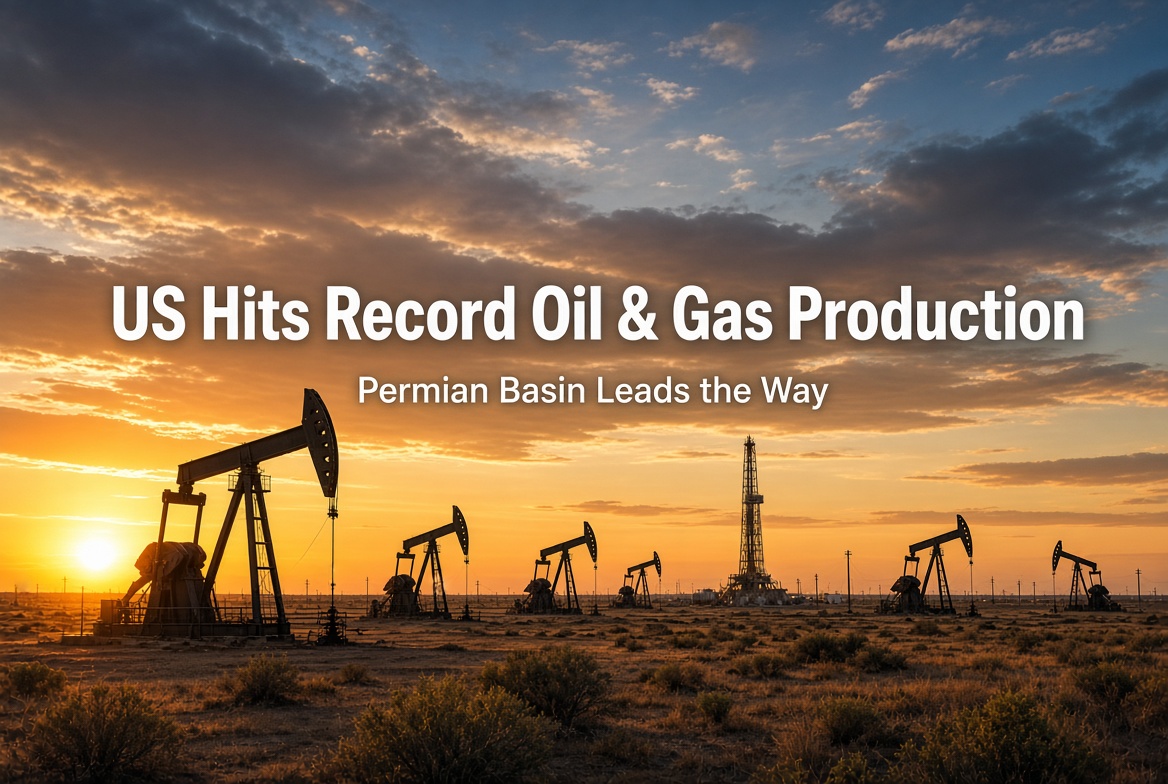
US crude oil hit a record 13.6 million barrels per day in 2025, with the Permian Basin topping 6.5 million. Natural gas set for new highs in 2026. Learn the details and impacts.
Energy Secretary Chris Wright credited American oil and gas workers for pushing U.S. production to all-time highs. Crude oil averaged a record 13.6 million barrels per day in 2025, with the Permian Basin alone exceeding 6.5 million. Natural gas is on track for another record in 2026 at 122.5 billion cubic feet per day, reinforcing the nation’s position as the world’s top producer amid ongoing global market pressures.
The United States continues to set new benchmarks in domestic energy output. According to data from the U.S. Energy Information Administration, crude oil production reached an annual record of 13.6 million barrels per day in 2025. The Permian Basin in West Texas and southeastern New Mexico accounted for nearly half of that total. Natural gas production is projected to climb further this year, supporting both domestic needs and exports.
Record Crude Oil Output in 2025
U.S. crude oil production, including lease condensate, averaged 13.6 million barrels per day last year. That figure marked a 3 percent increase, or about 350,000 barrels per day, over the previous record set in 2024. The growth occurred even as active rig counts in the Lower 48 states declined by roughly 5 percent and the number of wells drilled fell slightly.
Efficiency gains played a central role. Operators extracted more oil from each well through longer laterals, better completion techniques, and improved operational practices. New wells contributed about 2.9 million barrels per day, while existing wells produced the majority of the total.
The United States remained the world’s largest crude oil producer for the eighth consecutive year. Output exceeded the combined production of the next two largest producers by a significant margin.
Permian Basin as the Primary Driver
The Permian Basin delivered the bulk of the growth. Production there rose by about 280,000 barrels per day to reach 6.6 million barrels per day in 2025—more than 6.5 million and roughly 48 percent of the national total. The region’s stacked formations, including the Wolfcamp and Spraberry, continue to support high productivity.
Breakeven prices in the Midland and Delaware sub-basins hovered around $61 to $62 per barrel in 2025, below the annual average West Texas Intermediate price. This economic viability allowed operators to maintain or expand activity despite softer prices earlier in the year.
Other major shale regions, such as the Eagle Ford and Bakken, held relatively steady and each contributed around 9 percent of U.S. output. Federal Gulf of America production also rose modestly with new projects coming online.
Natural Gas Production on Track for New Highs
Marketed natural gas production is forecast to average 122.5 billion cubic feet per day in 2026, according to the EIA’s latest Short-Term Energy Outlook. That projection would surpass the 2025 record of 118.5 billion cubic feet per day.
Growth is concentrated in the Permian, where associated gas from oil wells is rising, and in the Haynesville region. First-half 2026 production already ran about 4 percent ahead of the same period in 2025. The United States has led global natural gas production for many years and continues to expand both domestic supply and liquefied natural gas exports.
Official Statements and Policy Context
Energy Secretary Chris Wright recently highlighted the role of American workers in achieving these records. In public remarks, he stated that oil and gas workers have driven production to an all-time high, making the United States the world’s largest producer of both oil and natural gas. He linked the results to policies aimed at expanding domestic energy development and reducing costs.
Wright has visited Permian facilities as part of broader efforts to promote the sector. Administration officials point to faster permitting times and a focus on unleashing American energy resources as contributing factors.
Balancing Perspectives on the Records
Supporters of the production surge emphasize energy independence, job creation in producing regions, and the United States’ ability to influence global markets. Higher output has helped stabilize domestic supply during periods of international tension.
Critics and some consumer advocates note that gasoline prices at the pump have remained elevated at times, even as production sets records. They also raise questions about long-term reserve sustainability and the environmental footprint of continued shale development. These debates continue alongside the production data.
Background on U.S. Production Growth
The rise in U.S. output over the past decade stems largely from advances in horizontal drilling and hydraulic fracturing. The Permian has transformed from a mature conventional basin into the world’s most productive shale oil region. Technology improvements have allowed operators to do more with fewer rigs, a trend that persisted into 2025.
The EIA tracks these changes closely through its monthly and annual reports. Productivity gains have offset lower activity levels in several recent years, enabling successive production records.
Timeline of Recent Milestones
- 2024: Previous U.S. crude oil record of approximately 13.2 million barrels per day.
- 2025: New annual crude oil record of 13.6 million barrels per day; Permian reaches 6.6 million. Natural gas sets a yearly high of 118.5 billion cubic feet per day.
- First half of 2026: Natural gas production runs ahead of the prior year.
- August 2026: EIA projects full-year natural gas average of 122.5 billion cubic feet per day. Energy Secretary Wright publicly credits workers for record oil and gas output.
Impact on Workers, Economy, and Markets
Record production supports employment in oilfield services, drilling, and related industries across Texas, New Mexico, and other producing states. Local economies in the Permian benefit from activity, royalties, and tax revenues.
On the consumer side, higher domestic supply can moderate price spikes during global disruptions. At the same time, refining capacity, distribution logistics, and international market dynamics still influence retail fuel prices. Natural gas abundance has supported industrial users and power generation while fueling growth in LNG exports.
Globally, U.S. volumes help balance markets and provide an alternative source of supply for importing nations.
Looking Ahead
EIA forecasts suggest crude oil production will remain elevated, though the pace of growth may moderate. Natural gas is expected to continue setting records in the near term, driven by associated gas and dedicated dry-gas plays. Operators will watch oil prices, infrastructure constraints, and regulatory developments closely.
Further efficiency improvements and infrastructure expansions could sustain high output levels. Policymakers and industry leaders continue to discuss how best to balance production growth with energy affordability and long-term resource management.
Frequently Asked Questions
What was the record U.S. crude oil production in 2025? The United States averaged 13.6 million barrels per day of crude oil, including lease condensate, according to the EIA.
How much did the Permian Basin produce? The Permian produced about 6.6 million barrels per day in 2025, accounting for roughly 48 percent of total U.S. crude oil output and surpassing 6.5 million.
What is the natural gas production forecast for 2026? The EIA projects marketed natural gas production will average 122.5 billion cubic feet per day, a new record.
Who is Energy Secretary Chris Wright and what did he say? Chris Wright is the U.S. Energy Secretary. He credited American oil and gas workers for driving production to all-time highs and making the United States the world’s largest producer of oil and natural gas.
Is the United States the top global oil producer? Yes. The U.S. has held the position of the world’s largest crude oil producer since 2018 and extended that lead with the 2025 record.
Why did production rise even with fewer rigs? Efficiency gains, including longer horizontal wells and improved completion techniques, allowed operators to produce more oil and gas from each well.
Do record production levels guarantee lower gasoline prices? Higher domestic supply can help stabilize markets, but retail prices are also influenced by refining, distribution, global events, and other factors.
U.S. oil and gas production reached historic levels in 2025 and is positioned for further natural gas records in 2026. The Permian Basin remains the central engine of this growth. Energy Secretary Chris Wright has pointed to the contributions of American workers and supportive policies. While the numbers underscore the scale of domestic resources and technological progress, discussions about consumer prices, long-term reserves, and market impacts continue. The data from the EIA provide a clear picture of current output and near-term expectations as the industry moves forward.
- American energy workers
- crude oil all-time high
- EIA latest data
- energy independence debate
- Energy Secretary Wright statement
- future of US energy
- gas prices vs production
- LNG and domestic supply
- natural gas high 2026
- Permian 6.5 million barrels
- Permian drives output
- production efficiency gains
- shale boom continues
- US oil production record
- US tops world oil
Author

admin@insiderglobal.news
Related Posts

US National Debt Tops $40 Trillion Milestone
- 0
- 1,167 word
US national debt hits $40.047 trillion, up from $39T in five months. Vance and Bessent outline growth plans amid rising interest costs....
- Bessent on 40 trillion
- budget deficit impact
- buybacks to start September
- debt grows faster than expected
- debt-to-GDP ratio
- fiscal challenges 2026
- how US reached 40 trillion
- interest costs rising
- markets react to debt
- national debt milestone
- publicly held debt 32 trillion
- Treasury debt report
- US debt hits 40 trillion
- Vance debt comments
Trump Pauses Canada Tariffs 3 Days, Eyes Keystone XL
- 0
- 1,293 word
Trump pauses 50% Canada tariffs for three days after talks with PM Carney. Deal could revive Keystone XL pipeline. See full details...
- $20 billion trade spared
- 50% tariff delay
- Canadian reaction mixed
- Carney Trump deal
- continental energy security
- dairy auto liquor talks
- energy deal hint
- final documents pending
- Keystone XL may return
- market access progress
- pipeline revival talk
- tariff deadline averted
- trade war pause
- Trump pauses Canada tariffs
- US-Canada trade breakthrough

Tesla Prepares Cybercab Robotaxi Launch in Austin This Month
- 0
- 1,103 word
Cybercab robotaxi Austin, purpose-built robotaxi, unsupervised autonomous vehicle, Giga Texas production, employee rides Tesla, Tesla Robotaxi service, two-seater Cybercab, no steering wheel...
- Austin Robotaxi expansion
- autonomous vehicle milestone
- Cybercab public road tests
- Cybercab vs Model Y
- employee rides start soon
- future of driverless taxis
- Giga Texas production ramps
- late August Cybercab
- no pedals no wheel vehicle
- purpose-built Cybercab arrives
- robotaxi debut this month
- Tesla Cybercab Austin launch
- Tesla first dedicated robotaxi
- Tesla ride-hailing update
- unsupervised Tesla taxi

Trump Asks Supreme Court to Approve White House Ballroom
- 0
- 1,223 word
Trump administration asks Supreme Court to resume $400 million White House ballroom construction, citing national security. Learn the legal battle and next...
- $400M ballroom fight
- appeals court blocks ballroom
- ballroom project timeline
- Congress vs executive power
- East Wing replacement lawsuit
- historic preservation challenge
- national security venue debate
- presidential bunker complex
- SCOTUS emergency request
- secure state visit facility
- Supreme Court White House case
- Trump East Wing demolition
- Trump Supreme Court ballroom
- White House construction halt
- White House security upgrade

SpaceX Completes $60B Acquisition of AI Coding Platform Cursor
- 0
- 1,210 word
SpaceX finalizes its $60 billion all-stock acquisition of Cursor, accelerating Grok development with new coding tools. Discover the details and impact on...
- $60B AI deal closes
- AI agent teammates
- AI coding race intensifies
- biggest tech acquisition 2026
- Cursor developer tools
- Cursor joins SpaceX
- enterprise AI expansion
- future of coding assistants
- Grok 4.6 progress
- Grok Bot launch momentum
- Grok coding boost
- Musk welcomes Cursor team
- SpaceX buys Cursor
- SpaceX compute advantage
- SpaceX stock conversion details

Lawrence Mayor Brian DePeña Arrested for $1.5M COVID Loan Fraud
- 0
- 1,245 word
Lawrence Mayor Brian DePeña was arrested by the FBI on wire fraud and money laundering charges over alleged misuse of $1.5M in...