- 0
- 1,444 word
Todd Blanche’s attorney general nomination faces a roadblock as GOP senators demand written proof that the DOJ spiked a $1.8B fund. Read the latest updates.
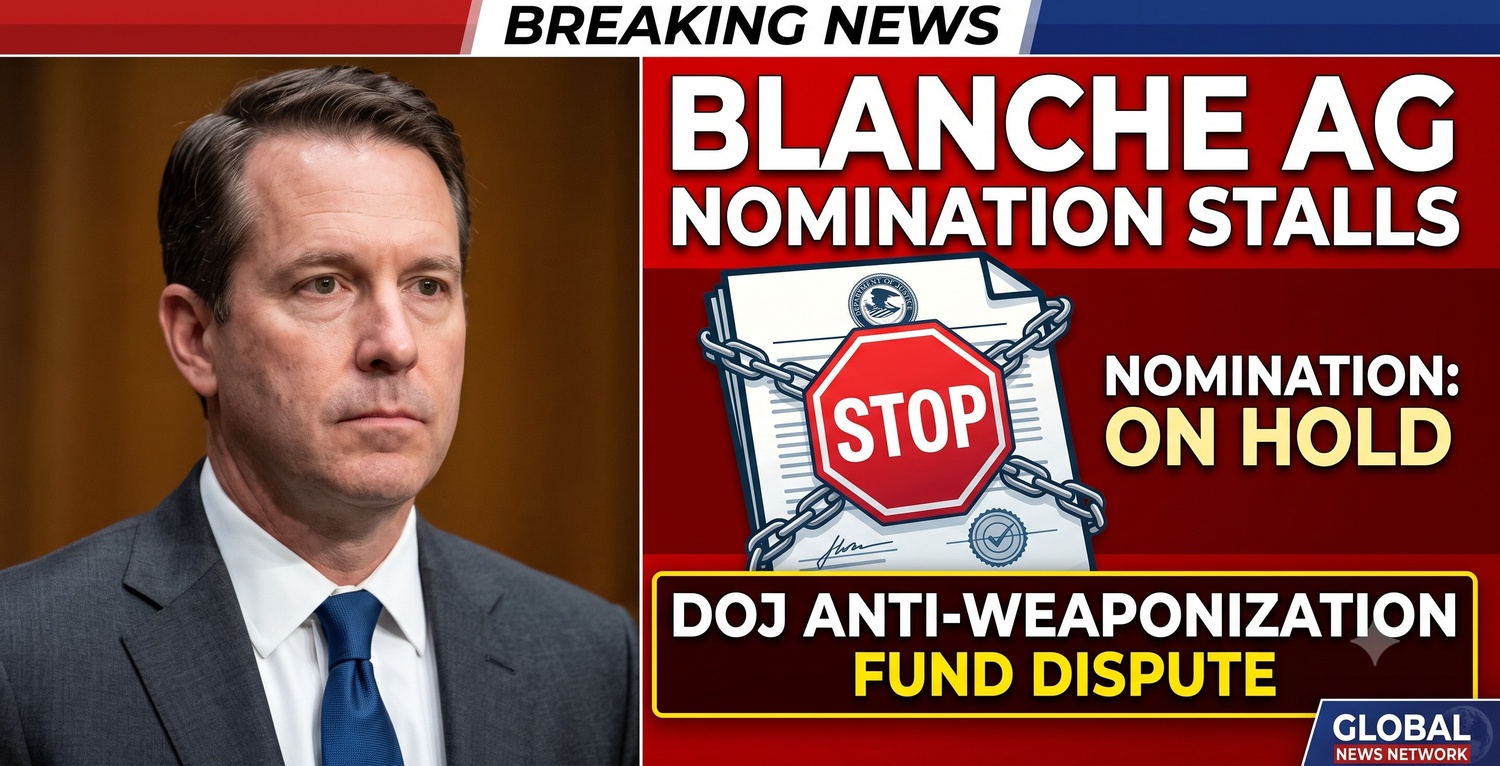
Todd Blanche Attorney General Nomination Stalls as DOJ Goes “Radio Silent” on Controversial Fund
The Todd Blanche attorney general nomination hangs in the balance as key Republican senators demand written assurance that the Justice Department will formally eliminate a controversial $1.8 billion “anti-weaponization” fund. With the DOJ reportedly “radio silent,” the Senate Judiciary Committee vote faces potential delays without immediate, documented concessions.
The confirmation prospects for Todd Blanche, President Donald Trump’s choice to lead the Department of Justice (DOJ), have hit a significant legislative roadblock. Just days before a critical Senate Judiciary Committee vote, two powerful Republican lawmakers are withholding their support, citing the administration’s failure to provide written guarantees regarding the termination of a highly controversial financial settlement.
Senators John Cornyn of Texas and Thom Tillis of North Carolina have drawn a line in the sand over a $1.8 billion pool of taxpayer money dubbed the “anti-weaponization” fund. While Blanche has offered verbal assurances that the fund will not move forward, the senators are demanding a formal, written modification to the underlying agreement.
With a razor-thin Republican majority on the committee and unified Democratic opposition, losing even a single GOP vote would effectively sink the Todd Blanche attorney general nomination before it ever reaches the Senate floor.
The Standoff Over the “Anti-Weaponization” Fund
The primary obstacle threatening Blanche’s confirmation stems from a legal agreement struck earlier this year. To secure the necessary committee votes, the administration must address bipartisan fears surrounding the nature and potential misuse of these public funds.
Origins of the $1.8 Billion Settlement
The disputed fund originated from a May 2026 settlement resolving a massive $10 billion civil lawsuit that President Trump had previously filed against the Internal Revenue Service (IRS). As part of the resolution, the agreement established a roughly $1.8 billion pool intended to compensate individuals who claimed they were wronged by the alleged “weaponization” of the Justice Department under previous administrations.
An additional addendum to the settlement purported to limit specific tax examinations involving Trump, his immediate family members, and their related corporate entities.
Bipartisan Pushback Against a Potential “Slush Fund”
The creation of the fund immediately sparked fierce backlash from both sides of the political aisle. Critics characterized the $1.8 billion pool as an unregulated “slush fund” capable of directing massive amounts of taxpayer money to Trump political allies. Lawmakers expressed specific concerns that the funds could be distributed to individuals who participated in the January 6, 2021, Capitol riot.
GOP Senators Demand Written Proof from DOJ
During a press briefing on Tuesday, Senator Cornyn expressed deep frustration with the Justice Department’s lack of communication. He indicated that the agency had failed to respond to requests for formal documentation confirming the fund’s demise.
“They’ve been kind of radio silent for the last 24 hours,” Cornyn told reporters on Capitol Hill. “I think my staff is talking to them, but we’re not — they know what they need to do. They just don’t want to do it.”
Cornyn confirmed that he expects to meet with Blanche on Wednesday morning, where he anticipates receiving a concrete, written proposal detailing exactly how the DOJ plans to permanently spike the fund.
“We need paper. We need it in writing. We don’t need well wishes or, you know, impressions,” Cornyn emphasized, signaling that verbal promises from the nominee would not secure his vote.
Senator Tillis struck a slightly more optimistic tone, noting that ongoing negotiations with the administration were “going pretty well.” However, Tillis firmly reiterated that he shares Cornyn’s prerequisite: the White House must execute formal documentation fully eliminating the fund before he casts a “yes” vote.
Blanche’s Defense and the Senate Judiciary Committee Vote
Todd Blanche is no stranger to defending the former president. Having previously served as Trump’s personal defense attorney, Blanche took over as acting attorney general in April 2026 following the abrupt departure of Pam Bondi.
Since his nomination for the permanent role, Blanche has repeatedly tried to distance himself from the $1.8 billion settlement.
Verbal Assurances Deemed Insufficient
During his contentious Senate Judiciary Committee confirmation hearing earlier this month, Blanche attempted to put the issue to rest. “The weaponization fund is dead, it’s not moving forward,” he stated unequivocally under oath.
The administration backed up this claim by asserting in recent court filings that it had officially abandoned the fund. Furthermore, Blanche argued that the remaining tax-related addendum strictly binds the IRS and the Treasury Department, meaning it falls outside the jurisdiction of the Justice Department.
However, these explanations have failed to satisfy holdout Republicans. Because President Trump previously praised the fund as “a great idea,” lawmakers fear the administration could attempt to resurrect the pool of money at a later date unless the underlying legal settlement is permanently and formally amended.
Timeline of the Controversy
- April 2026: Todd Blanche becomes acting attorney general following Pam Bondi’s departure.
- May 2026: The administration settles a $10 billion IRS lawsuit filed by Trump, establishing the $1.8 billion “anti-weaponization” fund.
- Early July 2026: Blanche faces aggressive questioning regarding the fund during his Senate Judiciary Committee confirmation hearing.
- July 28, 2026: Sen. Cornyn reveals the DOJ has gone “radio silent” on demands for written proof that the fund is dead.
- July 30, 2026: Scheduled date for the Senate Judiciary Committee vote on Blanche’s nomination.
Impact on the Justice Department and Future Developments
The current impasse underscores the immense leverage held by a handful of moderate and institutionalist Republicans in a closely divided Senate. The dispute has also highlighted internal GOP tensions, as some senators demanding accountability are the same lawmakers who have recently fended off Trump-backed primary challengers.
Senator Cornyn has publicly floated the possibility of postponing Thursday’s committee vote if the DOJ fails to deliver the requested paperwork. While he stated he had not yet discussed a formal delay with Judiciary Chairman Chuck Grassley, the threat looms large. Tillis has issued similar warnings.
If the Todd Blanche attorney general nomination stalls in committee, it will severely disrupt Republican leadership’s aggressive timeline to confirm the nominee on the Senate floor before the fast-approaching August recess. A delay leaves the Justice Department in a state of administrative limbo, governed by an acting head while grappling with high-profile caseloads, including the ongoing handling of sensitive Jeffrey Epstein-related files.
As the clock ticks toward the Thursday vote, the White House and the DOJ face immense pressure to satisfy the senators’ conditions or risk a humiliating, public defeat for one of the president’s top cabinet priorities.
Frequently Asked Questions (FAQs)
1. Why is the Todd Blanche attorney general nomination delayed? The nomination is facing delays because Republican Senators John Cornyn and Thom Tillis are withholding their support until the Justice Department provides written proof that it has permanently canceled a controversial $1.8 billion settlement fund.
2. What is the DOJ “anti-weaponization” fund? The fund is a $1.8 billion pool of taxpayer money created from a May 2026 settlement of a lawsuit Donald Trump filed against the IRS. It was purportedly designed to compensate individuals harmed by the alleged “weaponization” of the DOJ.
3. Why do lawmakers oppose the $1.8 billion fund? Critics from both parties fear the settlement serves as an unregulated slush fund that could direct massive payouts to political allies of the president, potentially including participants in the January 6 Capitol riot.
4. What has Todd Blanche said about the fund? During his confirmation hearings, Blanche testified under oath that the fund is “dead” and will not move forward. However, key senators are demanding this commitment in writing to prevent the fund from being quietly resurrected later.
5. What happens if Senators Cornyn and Tillis vote no? Because Democrats on the Senate Judiciary Committee are uniformly opposed to Blanche’s confirmation, the loss of even a single Republican vote would cause the nomination to fail in committee, preventing it from reaching the Senate floor.
6. Who is currently running the Justice Department? Todd Blanche has been serving as the acting attorney general since April 2026, when he replaced former acting head Pam Bondi.
The fate of the Todd Blanche attorney general nomination now hinges on a bureaucratic standoff over paperwork and political accountability. While Blanche and the administration insist the $1.8 billion “anti-weaponization” fund is dead, the refusal of key GOP senators to accept mere verbal assurances highlights a lingering distrust on Capitol Hill. Whether the Justice Department breaks its “radio silence” and delivers the requested legal modifications will not only determine who permanently leads the nation’s top law enforcement agency but also set a precedent for how the current administration handles public funds and political settlements moving forward.
- acting AG
- anti-weaponization fund
- attorney general nomination
- Capitol Hill
- Chuck Grassley
- confirmation hearing
- DOJ
- Donald Trump
- government accountability
- IRS settlement
- January 6 riot
- John Cornyn
- Justice Department
- Pam Bondi
- Republican senators
- Senate Judiciary Committee
- slush fund
- Thom Tillis
- Todd Blanche
- US Politics
Author

admin@insiderglobal.news
Related Posts

California Passes AB 2624 Expanding Privacy for Immigration Providers
- 0
- 1,290 word
California legislature passes AB 2624, extending Safe at Home protections to immigration support workers facing threats. Learn details, penalties, and reactions. Read...
- AB 2624 explained
- address confidentiality update
- ban doxxing service providers
- Bonta privacy measure
- California bill enrolled
- California passes immigration privacy bill
- Capitol protest planned
- free speech vs privacy debate
- immigration services safety
- journalist concerns AB 2624
- new California law 2027
- online posting restrictions
- protect immigration workers
- Safe at Home expansion
- threats against aid workers
Byron Donalds Wins Florida GOP Governor Primary
- 0
- 1,034 word
Trump-backed Rep. Byron Donalds wins Florida GOP primary for governor with nearly 50% of the vote. He faces Democrat David Jolly in...
- Byron Donalds primary win
- DeSantis successor
- Donalds vs Jolly
- first Black Florida governor
- Florida election night
- Florida governor race 2026
- GOP primary results
- James Fishback results
- Jay Collins loss
- moderate Democrat Jolly
- November showdown
- quick Florida vote count
- Republican unity call
- Sunshine State politics
- Trump Florida endorsement

Trump Posts ‘TRUMP 2028’ AI Images on Truth Social
- 0
- 1,107 word
President Trump posted AI images including a “TRUMP 2028” hat on Truth Social, sparking debate over a possible 2028 run despite the...
- 2028 speculation heats up
- 22nd Amendment explained
- AI image with Washington
- critics dismiss trolling
- political future debate
- Polymarket Trump hint
- presidential term limits news
- supporters hail 2028 posts
- TRUMP 2028 Truth Social
- Trump horseback AI
- Trump posts 2028 hat
- Trump third term tease
- Trump We are going to win
- Truth Social AI spree
Eman Abdelhadi Posts Spark Controversy After El-Sayed Win
- 0
- 1,178 word
University of Chicago professor Eman Abdelhadi’s controversial social media posts resurface following her half-brother Abdul El-Sayed’s Michigan Senate primary win. Eman Abdelhadi’s...
- 2026 elections
- Abdul El-Sayed
- academic freedom
- Broadview arrest
- Democratic primary
- Eman Abdelhadi
- End Wokeness
- free speech
- Haley Stevens
- ICE protests
- Libs of TikTok
- Michigan Senate race
- Mike Rogers
- political controversy
- political liability
- progressive politics
- settler colonialism
- social media backlash
- University of Chicago
- US Politics
Stevens & El-Sayed Clash in Fiery Michigan Senate Primary Debate
- 0
- 1,559 word
Explore the fiery 2026 Michigan Senate primary debate between Haley Stevens and Abdul El-Sayed. Dive into their clashes over AIPAC, policy, and...
- Abdul El-Sayed
- AIPAC funding
- battleground states
- campaign finance
- Democratic primary
- Detroit news
- FOX 2 Detroit debate
- Gary Peters replacement
- Gretchen Whitmer
- Haley Stevens
- ICE reform
- John Fetterman ogre comment
- Medicare for All
- Michigan elections
- Michigan politics
- Michigan Senate primary debate
- Mike Rogers
- progressive Democrats
- Senate race 2026
- US Senate control