- 0
- 1,165 word
U.S. Highlights Strait of Hormuz Alternative Oil Routes Amid Iran Standoff
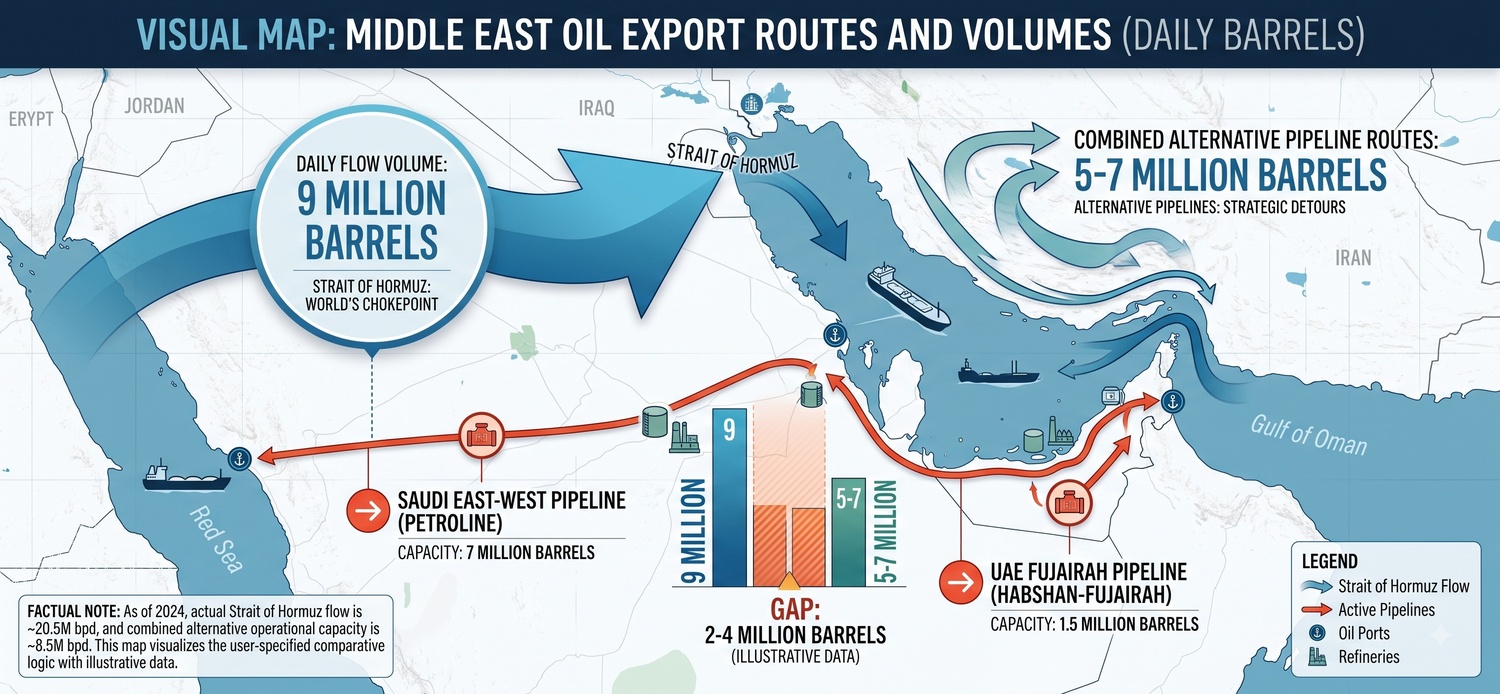
The Trump administration has highlighted significant progress in establishing alternative oil routes bypassing the Strait of Hormuz, successfully moving up to 7 million barrels daily via pipelines. Despite these efforts mitigating some global market disruptions, Iran maintains a firm grip on the strategic waterway, presenting stringent demands for its reopening and leaving the region in a precarious standoff.
As the geopolitical confrontation in the Middle East persists, the United States and its Gulf allies are aggressively adapting to restrictions in one of the world’s most critical energy chokepoints. With Iran tightly controlling maritime traffic through the Strait of Hormuz, the Trump administration has emphasized a strategic shift toward alternative oil export infrastructure.
U.S. Energy Secretary Chris Wright recently revealed that regional exports are averaging approximately 15 million barrels per day, utilizing a combination of upgraded pipelines and heavily escorted tanker transits. These measures are designed to bypass the strait and demonstrate that Iranian leverage over global oil supplies is eroding. However, the path to a complete normalization of energy markets remains fraught with diplomatic and military hurdles.
Key insight: Expanding overland pipelines allows Gulf states to export crude directly to the Red Sea and the Gulf of Oman, neutralizing the threat of a naval blockade in the Persian Gulf.
To circumvent the Strait of Hormuz, Gulf producers have heavily invested in overland infrastructure. The most significant of these alternative oil routes include Saudi Arabia’s East-West pipeline, which transports crude to the Red Sea, and the UAE’s Habshan-Fujairah pipeline, terminating in the Gulf of Oman.
According to Secretary Wright, these upgraded bypass routes are currently moving between 5 and 7 million barrels per day. Combined with the nearly 9 million barrels exiting through the strait under coordinated U.S. military escort, total regional outflows have stabilized at around 15 million barrels daily. During a recent surge, exports briefly peaked at over 20 million barrels in a single day—a figure matching pre-conflict averages.
Assessing the Numbers: U.S. Claims vs. Independent Data
While the U.S. Department of Energy portrays a robust recovery in oil flows, independent analysts present a more cautious picture. Firms like Kpler, which track global shipping data, have reported lower transit volumes through the strait, sometimes dipping into the low single digits.
Critics of the administration’s optimistic figures argue that visible tanker movements are still significantly below the historical average of 130 to 140 daily transits. High insurance premiums, the persistent risk of Iranian interception, and elevated maritime security threats continue to deter widespread commercial shipping.
The U.S. counters that private trackers often undercount vessels because many tankers are traveling covertly with their transponders disabled. The military’s overwatch and escort operations, particularly along the southern routes closer to Oman, have undeniably facilitated movement, though the exact volume remains a point of contention.
Despite U.S. efforts to develop alternative oil routes, Iran insists that the Strait of Hormuz will remain effectively closed or tightly restricted until its extensive conditions are met. The Iranian Supreme National Security Council has outlined a sweeping list of demands that blend regional geopolitics with economic relief.
Iran’s conditions for formal reopening include:
- Substantial financial compensation for wartime damages, allegedly totaling hundreds of billions of dollars.
- The immediate lifting of all U.S. economic sanctions and the release of frozen Iranian assets.
- The termination of the U.S.-led naval blockade.
- A significant reduction or complete withdrawal of U.S. military forces from the region.
- Comprehensive ceasefires encompassing Iranian allies in Lebanon, Gaza, and Yemen.
While Oman continues to mediate separate talks focusing on potential new shipping lane arrangements, Iranian leadership remains steadfast, linking any maritime concessions directly to broader diplomatic victories.
Impact on Global Oil Markets and Future Resilience
The ongoing standoff has forced Gulf states and the global energy market into a state of “managed uncertainty.” By aggressively accelerating the utilization of alternative oil routes, nations like Saudi Arabia and the UAE are securing their revenue streams while attempting to avoid further escalation.
Strategic Implications
- For the U.S. and Allies: Demonstrating that global oil can flow without relying entirely on the Strait of Hormuz weakens Tehran’s most potent geopolitical weapon.
- For Iran: Maintaining the capability to disrupt shipping preserves a critical bargaining chip in negotiations that have stalled over security guarantees.
- For Global Markets: The successful diversion of 5 to 7 million barrels per day has prevented the extreme price spikes initially feared at the onset of the blockade.
Future Developments
As the standoff drags into late 2026, the global energy sector faces a pivotal question: Can these alternative oil routes permanently dilute the strategic centrality of the Strait of Hormuz, or is a durable political settlement strictly necessary? In the short term, Gulf producers will likely continue investing heavily in pipeline resilience and non-strait export terminals. Meanwhile, diplomatic efforts brokered by Oman will remain the primary, albeit fragile, hope for restoring unrestricted free trade through the region.
Frequently Asked Questions
1. What are the main alternative oil routes bypassing the Strait of Hormuz? The primary bypass routes include Saudi Arabia’s East-West pipeline, which moves crude to the Red Sea, and the UAE’s Habshan-Fujairah pipeline, which transports oil to the Gulf of Oman.
2. How much oil is currently flowing through these bypass routes? U.S. Energy Secretary Chris Wright reports that between 5 and 7 million barrels of oil per day are currently being transported via these upgraded pipelines.
3. What are Iran’s demands to reopen the Strait of Hormuz? Iran is demanding the lifting of U.S. sanctions, the release of frozen assets, compensation for wartime damages, an end to the naval blockade, and regional ceasefires involving its allies in Lebanon, Gaza, and Yemen.
4. How is the U.S. assisting oil tankers in the region? The U.S. military is providing armed escorts and overwatch for commercial tankers traveling along southern routes near Oman to protect them from Iranian interception.
5. Why is there a discrepancy in reported oil flow data? Independent analysts track vessels using transponders, showing lower traffic. However, the U.S. government claims these trackers undercount covert shipments where vessels have turned their transponders off to avoid detection.
6. Has the blockade caused a spike in global oil prices? While the blockade raised fears of severe price spikes, the successful rerouting of oil and military escorts have managed to stabilize outflows at around 15 million barrels daily, mitigating extreme market shocks.
The successful expansion of alternative oil routes bypassing the Strait of Hormuz represents a significant logistical triumph for the U.S. and its Gulf allies. By securing the transport of millions of barrels daily through overland pipelines, they have blunted Iran’s ability to hold global energy markets hostage. However, as Tehran holds firm on its sweeping demands, the Strait of Hormuz remains a flashpoint of managed uncertainty. Until a comprehensive diplomatic resolution is reached, the global economy will remain reliant on these strategic bypasses to keep the lifeblood of international trade flowing.
- alternative oil routes
- Chris Wright
- energy chokepoints
- energy security
- global oil market
- international trade
- Iran demands
- Kpler shipping data
- Middle East geopolitics
- naval blockade
- oil prices
- oil tanker escorts
- Oman mediation
- Persian Gulf
- Red Sea pipelines
- Saudi East-West pipeline
- Strait of Hormuz
- Trump Administration
- U.S. Middle East policy
- UAE Fujairah pipeline
Author

admin@insiderglobal.news
Related Posts

Putin Explodes Over Peace Talks: Rejects Ceasefire, Demands Full Donbas Conquest Amid Fuel Crisis
- 0
- 562 words
Putin Explodes Over Peace Talks: Demands Donbas as Fuel Crisis Grips Russia Russian President Vladimir Putin has erupted in fury inside the...

U.S. Files Charges Against Raúl Castro for 1996 Brothers to the Rescue Plane Shoot-Down
- 0
- 1,111 word
U.S. Files Charges Against Former Cuban Leader Raúl Castro Over 1996 Civilian Plane Shootdown The United States Department of Justice has unsealed...
Read out all
Cuba Live-Fire Missile Drills: S-125 Air Defenses Challenge US Navy Carrier in Caribbean Standoff
- 0
- 306 words
Cuba Deploys Air Defenses as U.S. Navy Carrier Strike Group Approaches Cuba has activated its ground-based air defense network in a show...

U.S. Announces Withdrawal of 5,000 Troops from Europe, Heavily Impacting Poland
- 0
- 266 words
USA announces it’s withdrawing 5000 troops from Europe, out of which 4000 will be withdrawn from Poland. The United States has told...
Read out all
Rasoob-250 Cruise Missile: Pakistan’s Growing Missile Arsenal and Defense Push
- 0
- 279 words
Pakistan’s Rasoob-250 missile: Here’s what you need to know When Pakistan unveiled the Rasoob-250 cruise missile, retired Pakistan Air Force group captain...

FBI Director Kash Patel’s Olympic Locker Room Celebration Fuels Jet Use Backlash
- 0
- 129 words
FBI Director’s Olympic Celebration Sparks Jet Controversy FBI Director Kash Patel is facing criticism after viral footage showed him raucously celebrating with...