- 0
- 1,111 word
U.S. Files Charges Against Former Cuban Leader Raúl Castro Over 1996 Civilian Plane Shootdown
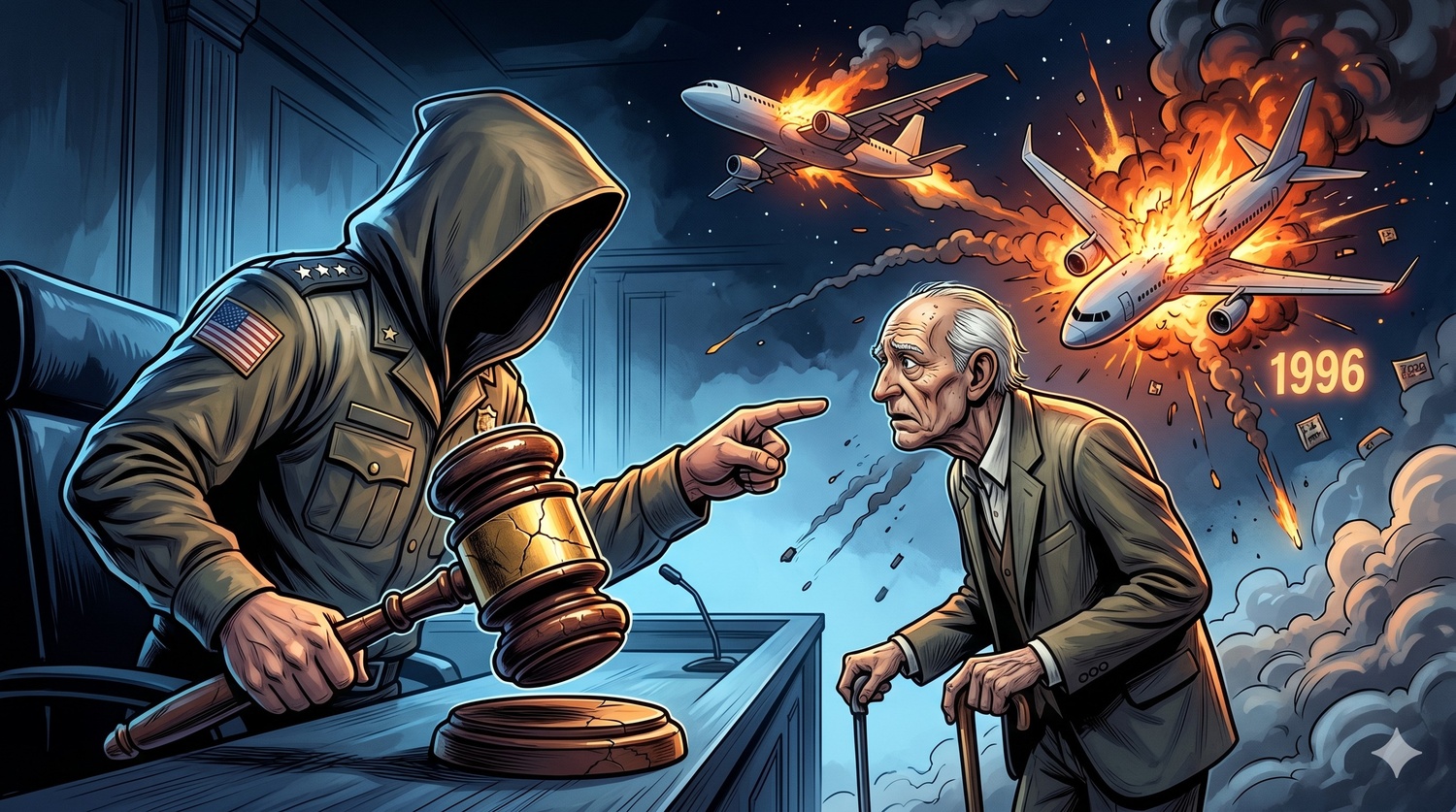
The United States Department of Justice has unsealed a historic indictment against former Cuban President and Defense Minister Raúl Castro, charging the 94-year-old revolutionary leader with murder and conspiracy in the 1996 shoot-down of two unarmed civilian aircraft over international waters. The charges, made public on May 20, 2026, represent a dramatic new chapter in the decades-long saga of the “Brothers to the Rescue” incident and mark the first time in nearly 70 years that senior Cuban leadership has faced criminal prosecution in a U.S. courtroom.
The Charges and the Incident
The superseding indictment, filed in the Southern District of Florida, charges Raúl Modesto Castro Ruz with one count of conspiracy to kill U.S. nationals, four counts of murder, and two counts of destruction of aircraft. Five other former Cuban military officers—Lorenzo Alberto Pérez-Pérez, Emilio José Palacio Blanco, José Fidel Gual Barzaga, Raúl Simanca Cárdenas, and Luis Raúl González-Pardo Rodríguez—are named as co-defendants, with González-Pardo reportedly the only one currently in U.S. custody.
At the heart of the case is the event of February 24, 1996. On that day, three small Cessna aircraft operated by the Miami-based exile humanitarian group Brothers to the Rescue (Hermanos al Rescate) flew from South Florida toward Cuba. The group had been conducting flights to search for Cuban rafters attempting the perilous crossing of the Florida Straits, but its activities had grown increasingly political, including dropping leaflets over Havana. Cuban Air Force MiG fighters intercepted two of the planes and fired air-to-air missiles, destroying the unarmed civilian aircraft without warning. All four men aboard were killed: Carlos Costa, Armando Alejandre Jr., Mario de la Peña, and Pablo Morales. Three of the victims were U.S. citizens.
The U.S. government maintains the aircraft was shot down over international waters, a finding later supported by the International Civil Aviation Organization (ICAO). The Justice Department alleges that Cuban intelligence agents had infiltrated Brothers to the Rescue in the early 1990s, relaying detailed operational information to military leadership, and that specific training exercises to target slow-moving civilian aircraft were conducted in the weeks before the attack.
A Long Road to Justice
“For nearly 30 years, the families of four murdered Americans waited for justice,” Acting Attorney General Todd Blanche stated at a press conference in Miami. “President Trump and this Justice Department are committed to restoring a simple principle: if you kill Americans, we will pursue you. No matter who you are. No matter what title you hold.” FBI Director Kash Patel echoed that sentiment, saying, “For 30 years these families have waited for answers—and this FBI never forgot.”
The victims’ families and Miami’s large Cuban exile community have long demanded accountability. At the time, President Bill Clinton condemned the attack and tightened sanctions, but his administration did not pursue criminal charges against the Castro brothers directly. In 2003, three Cuban military officers were indicted on similar charges, but none were extradited. The indictment unsealed this week supersedes and expands those earlier efforts.
Cuba’s Response: “Political Maneuver”
In Havana, the reaction was swift and defiant. Cuban President Miguel Díaz-Canel denounced the charges as a “political maneuver” with no legal basis, writing on social media platform X that the indictment “only reveals the arrogance and frustration of the empire’s representatives in the face of the unwavering resolve of the Cuban Revolution.” He further claimed Washington was building a file “to justify the folly of a military aggression against Cuba.”
Cuban Foreign Minister Bruno Rodríguez labeled the indictment “illegitimate and illegal,” accusing the U.S. of promoting a “fraudulent narrative” and reiterating Havana’s long-standing position that the 1996 action was taken in legitimate self-defense after repeated violations of Cuban airspace. Díaz-Canel insisted that Cuba had issued more than a dozen warnings to U.S. authorities about the flights before the shoot-down occurred.
A Tense Geopolitical Backdrop
The indictment arrives amid soaring U.S.-Cuba tensions. The Trump administration has tightened economic sanctions, including a near-blockade on fuel shipments, contributing to severe energy shortages and blackouts across the island. U.S. Secretary of State Marco Rubio, himself a Cuban-American, has openly called for political change in Havana. The parallel U.S. military operation that captured Venezuelan President Nicolás Maduro earlier this year has fueled speculation in Cuba that the Castro indictment is part of a broader pressure campaign aimed at toppling the communist government. The recent entry of the USS Nimitz Carrier Strike Group into the Caribbean Sea has further heightened tensions.
Raúl Castro’s Frailty
At 94, Raúl Castro remains a powerful symbol of the Cuban Revolution, but physically, he is a shadow of the guerrilla commander who fought alongside his brother Fidel in the Sierra Maestra. He retired from public office in 2021 and has rarely been seen since. His last public appearance was on May 1, 2026, where observers noted he appeared “visibly deteriorated” and physically weakened. President Díaz-Canel acknowledged in an April interview that Raúl is “alive but retired for health reasons” and “fragile due to his advanced age.” Reports indicate he has difficulty walking, speaking, and hearing. Photographs from his most recent outings have been allegedly altered by government media to downplay his decline, underscoring the regime’s sensitivity about his condition.
The practical question of extradition looms large. The U.S. has issued an arrest warrant, and Blanche stated officials “expect him to appear here, whether voluntarily or otherwise.” Yet with Cuba firmly rejecting the court’s jurisdiction and Castro physically unlikely to travel, the indictment may serve more as a symbolic act of accountability and a political lever than a prelude to a courtroom drama. Some analysts see it as a parallel to the capture of Maduro; others argue Cuba’s internal security and Castro’s retirement make a similar operation improbable.
What Comes Next
Legal experts suggest the case will proceed through the U.S. federal court system, with potential maximum penalties including death or life imprisonment for the murder charges. The presence of one co-defendant already in U.S. custody, Luis Raúl González-Pardo Rodríguez, held on immigration charges, provides a foothold for prosecutors. Yet absent a dramatic change in the political landscape, Raúl Castro himself is likely to remain beyond the physical reach of American justice, a defiant symbol in Havana of a revolution that refuses to yield. For the families of the four men killed on that February day in 1996, the indictment nonetheless marks the closest they have ever come to official acknowledgment of their loss.
Author

admin@insiderglobal.news
Related Posts
U.S. Highlights Strait of Hormuz Alternative Oil Routes
- 0
- 1,165 word
U.S. Highlights Strait of Hormuz Alternative Oil Routes Amid Iran Standoff The Trump administration has highlighted significant progress in establishing alternative oil...
- alternative oil routes
- Chris Wright
- energy chokepoints
- energy security
- global oil market
- international trade
- Iran demands
- Kpler shipping data
- Middle East geopolitics
- naval blockade
- oil prices
- oil tanker escorts
- Oman mediation
- Persian Gulf
- Red Sea pipelines
- Saudi East-West pipeline
- Strait of Hormuz
- Trump Administration
- U.S. Middle East policy
- UAE Fujairah pipeline
Putin Explodes Over Peace Talks: Rejects Ceasefire, Demands Full Donbas Conquest Amid Fuel Crisis
- 0
- 562 words
Putin Explodes Over Peace Talks: Demands Donbas as Fuel Crisis Grips Russia Russian President Vladimir Putin has erupted in fury inside the...
Cuba Live-Fire Missile Drills: S-125 Air Defenses Challenge US Navy Carrier in Caribbean Standoff
- 0
- 306 words
Cuba Deploys Air Defenses as U.S. Navy Carrier Strike Group Approaches Cuba has activated its ground-based air defense network in a show...
U.S. Announces Withdrawal of 5,000 Troops from Europe, Heavily Impacting Poland
- 0
- 266 words
USA announces it’s withdrawing 5000 troops from Europe, out of which 4000 will be withdrawn from Poland. The United States has told...
Read out all
Rasoob-250 Cruise Missile: Pakistan’s Growing Missile Arsenal and Defense Push
- 0
- 279 words
Pakistan’s Rasoob-250 missile: Here’s what you need to know When Pakistan unveiled the Rasoob-250 cruise missile, retired Pakistan Air Force group captain...
FBI Director Kash Patel’s Olympic Locker Room Celebration Fuels Jet Use Backlash
- 0
- 129 words
FBI Director’s Olympic Celebration Sparks Jet Controversy FBI Director Kash Patel is facing criticism after viral footage showed him raucously celebrating with...