- 0
- 509 words
Iran IRGC Floods Iraqi Kurdistan Border with Special Forces in Major Escalation
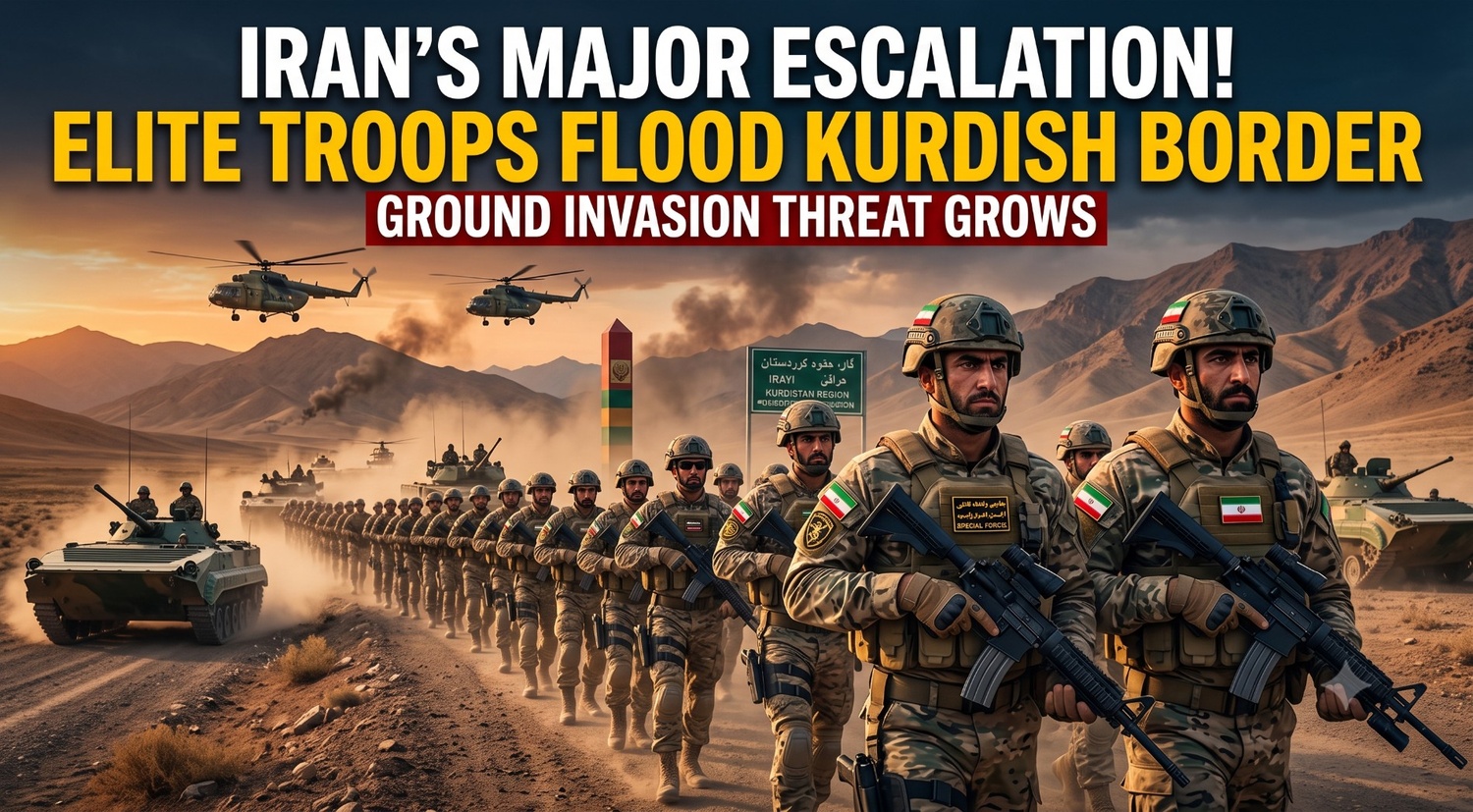
Iran has dramatically escalated its campaign against Kurdish opposition groups by deploying thousands of special forces and rapid reaction units along its western border with Iraqi Kurdistan. The massive troop buildup signals a clear shift from months of drone and missile strikes to the potential for a large-scale ground operation aimed at dismantling Iranian Kurdish bases that Tehran claims are being used by Western intelligence to destabilize the regime.
Following deadly assaults—including a recent strike on Peshmerga headquarters—and repeated attacks on groups such as the Democratic Party of Iranian Kurdistan (PDKI), PJAK, and Komala, Iranian forces are now massing near key border areas in West Azerbaijan and Kermanshah provinces. The Islamic Revolutionary Guard Corps (IRGC) has framed the move as “active deterrence,” replacing earlier hit-and-run tactics with a more aggressive posture. Officials in Tehran warn they may establish a security zone extending several kilometers into Iraqi territory if militants continue cross-border activity.
This is not merely a border security operation. Analysts see it as a desperate attempt by the Iranian regime to secure its rear flank while under intense pressure from U.S. military strikes in the Gulf and the broader regional conflict. With its navy squeezed in the Strait of Hormuz and land corridors under threat, Tehran is determined to eliminate any internal threat that could be exploited by adversaries. Iranian Kurdish opposition groups based in the Kurdistan Region of Iraq (KRI) have long been accused by the regime of collaborating with the United States and Israel. By threatening a ground invasion, Iran is applying maximum pressure on the Kurdish authorities in Erbil and Sulaymaniyah.
The message to the Kurdistan Regional Government is blunt: either crack down on the Iranian opposition factions operating from your territory or prepare for war on your doorstep. Kurdish leaders have repeatedly rejected involvement in any anti-Iran campaign and insisted on neutrality, but the growing military presence raises the risk of miscalculation or direct confrontation.
The deployment comes amid ongoing low-level clashes. Just days earlier, IRGC units engaged opposition fighters near Piranshahr and Mahabad, killing several militants. Combined with previous waves of more than 650 drones and missiles fired at the KRI since February 2026, the latest move marks a significant intensification. Tehran appears ready to risk a wider conflict in northern Iraq rather than allow what it views as a Western-backed fifth column to operate freely.
For the broader region, the stakes are high. A ground operation into Iraqi Kurdistan could drag the semi-autonomous region deeper into the Iran-U.S. confrontation, threaten oil infrastructure, and further strain Baghdad’s fragile authority. It also risks drawing in other actors if violence spills over.
By flooding the border with elite troops, Iran is gambling that intimidation will force compliance from Erbil and silence the opposition. Whether this high-stakes move succeeds—or ignites a new front—will determine if Tehran can stabilize its western frontier or if the regime’s mounting pressures will instead produce a dangerous new theater of war.
Author

admin@insiderglobal.news
Related Posts

Tom Homan Rejects Racial Profiling Claims by Angie Nixon
- 0
- 1,230 word
Border Czar Tom Homan dismisses Angie Nixon’s ICE racial profiling accusations as ridiculous. He stresses legal standards and equal enforcement. Read the...
- Angie Nixon slave catchers comment
- Border Czar equal opportunity deporter
- claims ICE will shoot citizens
- community trust vs safety
- Florida Senate immigration fight
- Fox News Homan interview
- Homan Fox News appearance
- Homan rejects profiling claims
- ICE racial profiling debate
- interior immigration operations
- multi-country deportations
- progressive vs enforcement views
- reasonable suspicion explained
- sanctuary cities ICE response
- Trump border enforcement

Elon Musk Targets 30 Daily Starship Launches by 2030
- 0
- 1,267 word
Elon Musk sets ambitious goal of 30+ Starship launches daily by 2030. Explore the leap from current flights, aviation comparison, and key...
- 10000 Starship flights year
- challenges to daily rocket launches
- future of orbital transport
- high-cadence spaceflight
- Musk 30 Starship launches daily
- Musk airplane comparison
- next era of space access
- propellant for daily launches
- rapid Earth-to-Earth rockets
- SpaceX 2030 launch goal
- SpaceX pad construction
- SpaceX Texas Florida expansion
- Starship airline-like cadence
- Starship flight test record
- Starship reusability push

Einride Orders 500 Tesla Semis for North America Fleet
- 0
- 1,066 word
Swedish firm Einride will phase in 500 Tesla Semis over 24 months, tripling its fleet for Amazon and others. Explore the $125M+...
- California Georgia freight corridors
- capacity without ownership
- commercial EV trucking
- Einride buys 500 Tesla Semis
- Einride revenue growth
- Einride triples fleet
- electric trucks for Amazon
- largest Tesla Semi order
- phased electric truck rollout
- Saga AI fleet management
- sustainable trucking milestone
- Tesla Semi 500-mile range
- Tesla Semi cost savings
- Tesla Semi North America
- zero-emission freight expansion

Trump Honors 16-year-old Ryder Williams Lifeguard Who Saved Boy from Rough Surf
- 0
- 1,218 word
President Trump honored 16-year-old lifeguard Ryder Williams and the boy he rescued at the White House. Learn about the heroic Santa Cruz...
- boy saved from waves honored
- California teen bravery
- courage under waves
- everyday hero recognition
- firefighter dream realized
- Lincoln Bedroom tour
- Nathaniel Rai White House
- Oval Office rescue story
- presidential honor ceremony
- rough surf survival
- Ryder Williams Trump meeting
- Santa Cruz hero visit
- teen lifeguard White House
- Trump praises lifeguard
- viral beach rescue president
USS Abraham Lincoln Faces Shortages After Record 260-Day Deployment
- 0
- 1,243 word
Families report food, soap, and plumbing shortages on the USS Abraham Lincoln after 260 days at sea. Officials push back as the...
- 260 days at sea
- Abraham Lincoln shortages
- carrier crew conditions
- combat carrier life
- Cooper visits Lincoln
- families raise alarm
- George Washington relief
- Hegseth response
- long deployment toll
- moldy showers ship
- Navy food reports
- Navy logistics challenges
- sailor mental health
- supply chain strain
- veteran pushes back

Minnesota Poll Workers Explain Voter Vouching in Undercover Video
- 0
- 1,390 word
Undercover footage captures Minnesota poll workers explaining how one registered voter can vouch for up to eight others. See official response and...
- Cam Higby burqa polling place
- election day vouching explained
- election security debate 2026
- false oath felony
- hidden camera Minnesota
- how vouching actually works
- Minneapolis primary undercover
- Minnesota poll workers video
- O’Keefe exposes vouching
- rare use of vouching data
- reform after video release
- SAVE America Act push
- Secretary of State reacts
- voter vouching loophole claim
- you’re the ID clip