- 0
- 1,243 word
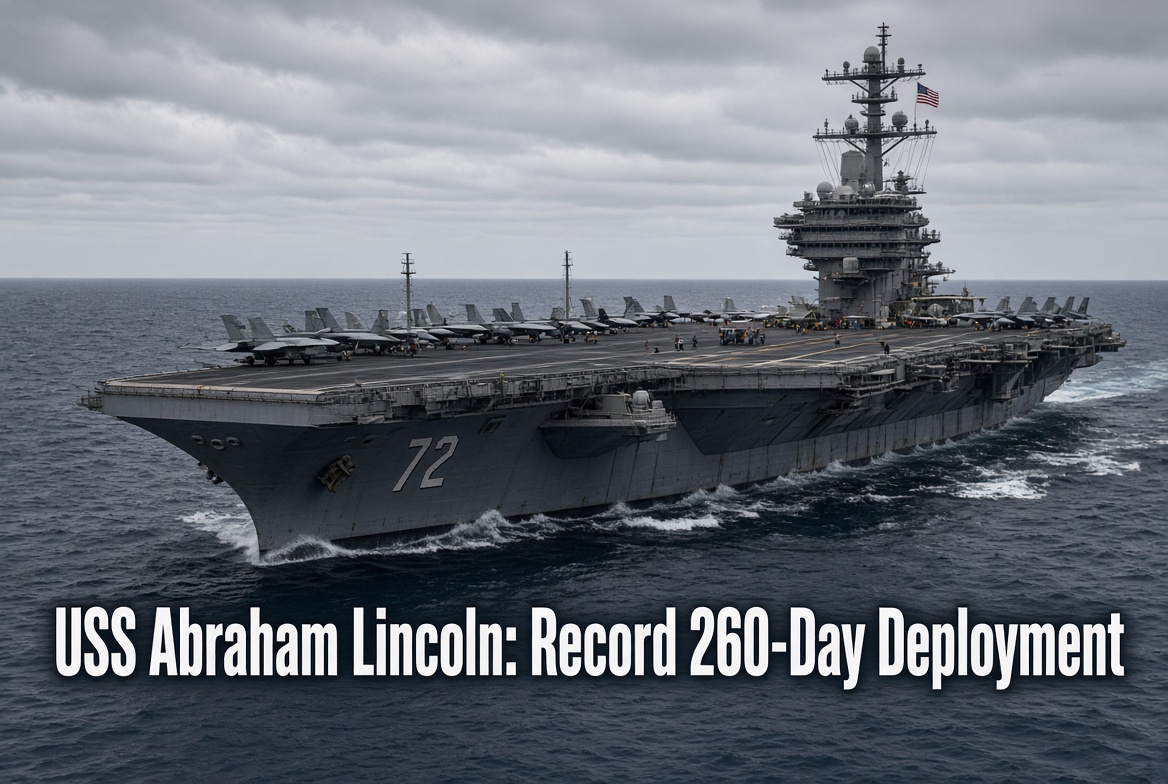
Families report food, soap, and plumbing shortages on the USS Abraham Lincoln after 260 days at sea. Officials push back as the USS George Washington prepares to relieve the carrier. Read the full update.
Families of sailors and Marines aboard the USS Abraham Lincoln have described shortages of food, soap, and other basics after a record-setting deployment lasting more than 260 days. Videos and personal accounts detail exhausted crews, moldy showers, and plumbing problems while the carrier supported Middle East operations. Defense officials have called some reports misrepresented, and a veteran has pushed back against the complaints. The USS George Washington is now moving in to relieve the Lincoln.
The USS Abraham Lincoln, a Nimitz-class aircraft carrier based in San Diego, left port on November 21, 2025. What began as a planned Pacific deployment shifted when the ship was redirected to the Middle East. By early 2026 it was supporting combat operations linked to the conflict with Iran. The deployment stretched far beyond the original schedule, with limited port visits and extended periods at sea that set modern records for consecutive days underway.
Reports from Families and Crew
Relatives and some service members have shared accounts of difficult living conditions. Families described periods when food portions were limited, with reports of meals reduced to rice and tortillas or basic combinations of noodles and canned items. Fresh produce and dairy products proved especially hard to maintain because of the long distances involved in resupply.
Hygiene supplies also ran low at times. Sailors reported shortages of soap, toothpaste, deodorant, and other personal items. The ship’s store sometimes had long lines and empty shelves. Plumbing problems added to the strain. Accounts mentioned mold in showers, broken toilets, limited hot water, and laundry facilities that were offline for stretches of time.
Videos and messages circulating among families highlighted fatigue after months of high operational tempo. Some expressed concern that exhaustion could increase the risk of mistakes on a busy flight deck. Mental health strains were also raised, with families noting the emotional toll of prolonged isolation and uncertainty about a return date.
Similar concerns have surfaced regarding other ships supporting the same operations, including reports involving the USS Boxer. Navy officials have disputed several of those claims.
Official Responses and Pushback
Defense Secretary Pete Hegseth has described the more severe reports as misrepresented. He emphasized that the department works to ensure every ship and crew receives necessary support and expressed respect for sailors serving on extended missions.
Adm. Brad Cooper, commander of U.S. Central Command, visited the Abraham Lincoln and praised the crew. He called the deployment one of the most intense and consequential of the modern era. Cooper noted that the carrier had among the lowest numbers of mental health cases across the Navy’s active aircraft carriers and credited leadership for prioritizing resilience. He acknowledged that long periods at sea are uniquely challenging while highlighting the crew’s accomplishments, including thousands of combat sorties and defensive actions.
Double-amputee Marine veteran and commentator Joey Jones pushed back against some of the complaints. Drawing on his own combat deployments, he argued that conditions described in recent accounts were less severe than the hardships many service members have faced and suggested the complaints were exaggerated relative to the demands of military service.
Navy spokespeople have stated that the ship maintains adequate supplies of food and essentials to sustain operations, even if certain items run low temporarily. They note that combat conditions disrupted traditional supply routes and that leadership prioritizes mission-critical deliveries first.
Background on the Deployment
Typical aircraft carrier deployments last about six months and include regular port calls for rest, resupply, and maintenance. The Abraham Lincoln’s mission departed from that pattern. After leaving San Diego, the carrier made limited stops, including brief visits that did little to break the long stretches at sea. One period without a port call exceeded 200 consecutive days, a modern record.
The ship launched thousands of sorties and dropped substantial ordnance while helping enforce maritime security measures. Its air wing and supporting ships operated under sustained pressure in a contested environment. Logistics challenges grew as traditional regional hubs faced disruption from the fighting.
Timeline of Key Events
- November 21, 2025: USS Abraham Lincoln departs San Diego.
- Early 2026: Ship redirected to the Middle East as operations intensify.
- Spring 2026: Initial reports of supply concerns surface; Navy disputes shortage claims.
- Summer 2026: Deployment extensions continue; families raise living-condition issues more publicly.
- August 2026: Lawmakers seek answers; Adm. Cooper visits; USS George Washington prepares to relieve the Lincoln.
Impact and Broader Concerns
The extended deployment has affected roughly 5,000 sailors and Marines aboard the Lincoln. Families describe emotional strain from limited contact and delayed mail or care packages. For the Navy, the episode raises questions about sustaining high-tempo operations over long distances when supply chains are stressed.
Lawmakers have begun examining the situation. Some have requested details on measures to protect crew welfare, the effects of resource strain, and whether systemic supply-chain problems linked to the conflict require further attention. The challenges highlight the difficulty of maintaining large crews at sea for record periods while conducting combat support missions.
Future Developments
The USS George Washington is moving to take over the Abraham Lincoln’s role in the region. Once the relief is complete, the Lincoln and its crew are expected to begin the transit home. Officials have indicated that additional support resources, including counselors, have been directed to the ship as needed.
The Navy continues to monitor conditions across deployed forces. Discussions about logistics capacity, the frequency of port visits during high-demand operations, and long-term readiness are likely to continue in Congress and within the service.
Frequently Asked Questions
How long has the USS Abraham Lincoln been deployed? The carrier has been away from its home port for more than 260 days, with a record stretch of consecutive days at sea exceeding 200.
What shortages have been reported? Families and some crew accounts describe limited food options at times, shortages of soap and hygiene items, mold in showers, plumbing problems, and restricted hot water or laundry service.
How has the Navy responded? Officials state that supplies remain adequate to sustain operations and that some reports have been misrepresented. They acknowledge temporary shortfalls can occur under combat logistics conditions.
What did Adm. Brad Cooper say? He praised the crew’s resilience and performance, noted relatively low mental health case numbers compared with other carriers, and described the deployment as historically significant.
Is the USS George Washington relieving the Lincoln? Yes. The George Washington is preparing to take over the mission so the Abraham Lincoln can return.
Have similar issues been reported on other ships? Some family accounts have raised concerns about the USS Boxer and other vessels. The Navy has disputed several of those claims.
Are lawmakers involved? Yes. Several members of Congress have asked the Pentagon for information on crew conditions, supply processes, and support measures.
The USS Abraham Lincoln’s record 260-day deployment has placed extraordinary demands on its crew while supporting critical Middle East operations. Family accounts of shortages and living-condition challenges stand alongside official statements that supplies are sufficient and that the crew has performed with resilience. As the USS George Washington moves in to relieve the carrier, attention is turning to how the Navy sustains sailors during prolonged high-tempo missions and what adjustments may be needed for future operations. The episode underscores both the capabilities of U.S. naval forces and the human costs of extended deployments in contested regions.
- 260 days at sea
- Abraham Lincoln shortages
- carrier crew conditions
- combat carrier life
- Cooper visits Lincoln
- families raise alarm
- George Washington relief
- Hegseth response
- long deployment toll
- moldy showers ship
- Navy food reports
- Navy logistics challenges
- sailor mental health
- supply chain strain
- veteran pushes back
Author

admin@insiderglobal.news
Related Posts

Tom Homan Rejects Racial Profiling Claims by Angie Nixon
- 0
- 1,230 word
Border Czar Tom Homan dismisses Angie Nixon’s ICE racial profiling accusations as ridiculous. He stresses legal standards and equal enforcement. Read the...
- Angie Nixon slave catchers comment
- Border Czar equal opportunity deporter
- claims ICE will shoot citizens
- community trust vs safety
- Florida Senate immigration fight
- Fox News Homan interview
- Homan Fox News appearance
- Homan rejects profiling claims
- ICE racial profiling debate
- interior immigration operations
- multi-country deportations
- progressive vs enforcement views
- reasonable suspicion explained
- sanctuary cities ICE response
- Trump border enforcement

Elon Musk Targets 30 Daily Starship Launches by 2030
- 0
- 1,267 word
Elon Musk sets ambitious goal of 30+ Starship launches daily by 2030. Explore the leap from current flights, aviation comparison, and key...
- 10000 Starship flights year
- challenges to daily rocket launches
- future of orbital transport
- high-cadence spaceflight
- Musk 30 Starship launches daily
- Musk airplane comparison
- next era of space access
- propellant for daily launches
- rapid Earth-to-Earth rockets
- SpaceX 2030 launch goal
- SpaceX pad construction
- SpaceX Texas Florida expansion
- Starship airline-like cadence
- Starship flight test record
- Starship reusability push

Einride Orders 500 Tesla Semis for North America Fleet
- 0
- 1,066 word
Swedish firm Einride will phase in 500 Tesla Semis over 24 months, tripling its fleet for Amazon and others. Explore the $125M+...
- California Georgia freight corridors
- capacity without ownership
- commercial EV trucking
- Einride buys 500 Tesla Semis
- Einride revenue growth
- Einride triples fleet
- electric trucks for Amazon
- largest Tesla Semi order
- phased electric truck rollout
- Saga AI fleet management
- sustainable trucking milestone
- Tesla Semi 500-mile range
- Tesla Semi cost savings
- Tesla Semi North America
- zero-emission freight expansion

Trump Honors 16-year-old Ryder Williams Lifeguard Who Saved Boy from Rough Surf
- 0
- 1,218 word
President Trump honored 16-year-old lifeguard Ryder Williams and the boy he rescued at the White House. Learn about the heroic Santa Cruz...
- boy saved from waves honored
- California teen bravery
- courage under waves
- everyday hero recognition
- firefighter dream realized
- Lincoln Bedroom tour
- Nathaniel Rai White House
- Oval Office rescue story
- presidential honor ceremony
- rough surf survival
- Ryder Williams Trump meeting
- Santa Cruz hero visit
- teen lifeguard White House
- Trump praises lifeguard
- viral beach rescue president

Minnesota Poll Workers Explain Voter Vouching in Undercover Video
- 0
- 1,390 word
Undercover footage captures Minnesota poll workers explaining how one registered voter can vouch for up to eight others. See official response and...
- Cam Higby burqa polling place
- election day vouching explained
- election security debate 2026
- false oath felony
- hidden camera Minnesota
- how vouching actually works
- Minneapolis primary undercover
- Minnesota poll workers video
- O’Keefe exposes vouching
- rare use of vouching data
- reform after video release
- SAVE America Act push
- Secretary of State reacts
- voter vouching loophole claim
- you’re the ID clip

Marvel Reveals X-Men Cast for 2028 MCU Movie at D23
- 0
- 1,110 word
Marvel Studios revealed the X-Men cast at D23, led by Sadie Sink as Jean Grey. See the full lineup including Adam Driver...