- 0
- 1,614 word
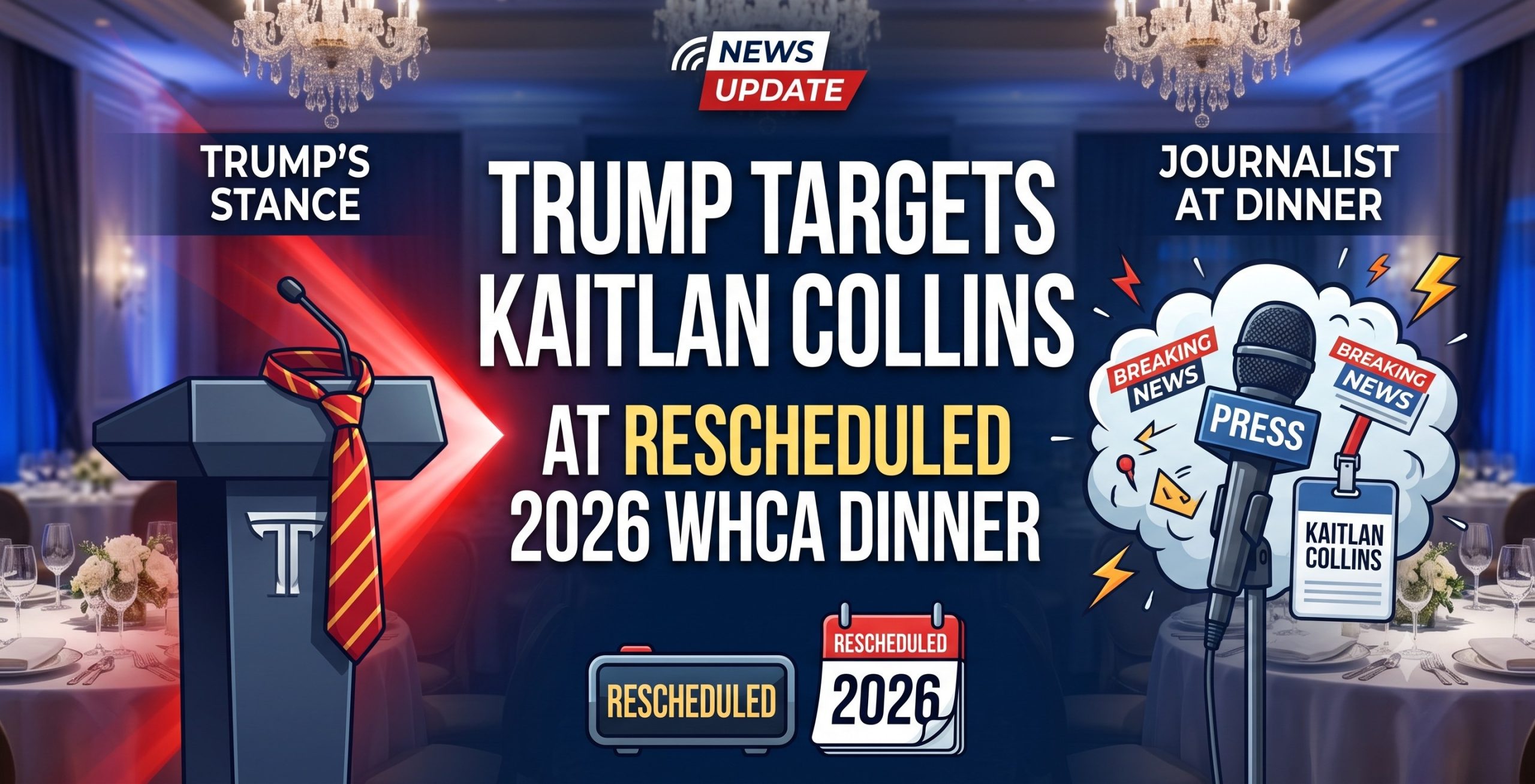
President Donald Trump launched a blistering series of personal attacks against CNN’s Kaitlan Collins during the rescheduled White House Correspondents’ Association (WHCA) on Friday, July 24, 2026. Addressing hundreds of journalists in Washington, D.C., Trump dismissed her prestigious journalism award as “fake,” instructed her to “smile,” and mocked her network in an hour-long, combative address.
Introduction: The annual White House Correspondents’ Dinner is traditionally a night where journalists, politicians, and the president share lighthearted roasts and celebrate the First Amendment. However, the 2026 event marked a stark departure from tradition. President Donald Trump used the evening to air long-standing grievances, primarily directing his ire at CNN chief White House correspondent Kaitlan Collins.
Held at the Waldorf Astoria under heavy security following a disrupted April attempt, the gathering exposed the deep, ongoing rift between the Trump administration and the Washington press corps. From branding reputable awards as “fake” to aiming gendered critiques at a prominent female reporter, the evening’s remarks generated immediate backlash from media organizations while delighting the president’s political base.
The Speech: Donald Trump Takes Aim at Kaitlan Collins
When Kaitlan Collins was awarded the WHCA’s Award for Excellence in Presidential News Coverage Under Deadline Pressure for Broadcast, the achievement highlighted her relentless questioning of the administration. President Trump, taking the stage later in the evening, immediately sought to undermine the recognition.
“I want to personally congratulate CNN’s Kaitlan Collins on receiving her award,” Trump declared to the room of reporters and political figures. “It was all about me. It’s a fake. She shouldn’t get the award. It was a fake, but I didn’t mind. I said, Kaitlan, congratulations. But it was fake. There’s no question about it.”
Demeanor, Gendered Jabs, and Tangents
Trump did not stop at criticizing the award itself. He quickly pivoted to remarks about Collins’s physical appearance and on-camera demeanor, a familiar tactic the president has utilized against female journalists throughout his political career.
“But she’s a young, attractive woman. She never smiles,” the president continued. “I said, Kaitlan, you ever smile? Smile. You have a nice position. You’re at CNN fake news. You should be a happy person. So smile, Kaitlan. Just smile.”
The president then wove a bizarre, tangential joke involving the Bud Light marketing controversy and Dylan Mulvaney before moving on to target other reporters in the room. Observers noted that when Collins had approached the president for a handshake earlier in the night after accepting her $5,000 prize from veteran anchor Wolf Blitzer, Trump offered a strained smile in return.
Security Threats and a Relocated Venue
The tension in the Waldorf Astoria ballroom was already palpable before Trump even approached the microphone. The Friday night event was a make-up date for the original dinner scheduled in April 2026 at the Washington Hilton. That spring gathering was abruptly evacuated due to an active shooter incident—described by federal authorities as an attempted assassination against the president.
Timeline of the 2026 White House Disruptions
- April 25, 2026: The original WHCA dinner is halted abruptly when an armed suspect breaches security at the Washington Hilton.
- May 2026: WHCA organizers announce the event will be rescheduled for July, emphasizing that democratic norms and press freedom will not be intimidated by violence.
- June 2026: Trump and Collins clash in the Oval Office. He calls her a “corrupt reporter” who “never smiles,” escalating tensions ahead of the rescheduled dinner.
- July 24, 2026: The dinner takes place at the Waldorf Astoria under unprecedented security. Trump delivers his hour-long address targeting multiple journalists.
Opening his July speech, Trump acknowledged the prior disruption with characteristic bravado. “As I said three months ago, the show must go on,” he stated, noting he had discarded some of the sharper jokes written for the April date. Yet, the material he kept remained remarkably aggressive.
A Broadside Against the Press Corps
Collins was not the only journalist to draw the president’s fire. The address functioned as a rapid-fire airing of grievances against media figures whom Trump views as adversaries.
He branded CNN anchor Jake Tapper as “Fake Tapper.” He took aim at Wall Street Journal reporter Josh Dawsey—who also won a prestigious WHCA reporting award that evening—calling him nearly “unhireable.” Prominent broadcast figures like Anderson Cooper and Don Lemon were also swept into the president’s line of fire.
The audience’s reaction shifted noticeably as the speech dragged on. What began as polite, customary laughter early in the evening steadily devolved into a muted, uncomfortable silence. Several reporters covering the event noted that even Republican attendees appeared stunned by the sheer volume of personal barbs.
Near the end of his remarks, the president donned a red “Trump 2028” hat, quipping about a constitutionally barred third term, and questioned how he could have won the election decisively if he truly received “93 percent negative publicity,” as his internal reports suggested.
CNN and the Journalism Industry Respond
The reaction from the media industry was swift and defensive, viewing the president’s remarks not as a comedy roast, but as a calculated attempt to delegitimize independent oversight.
A spokesperson for CNN immediately reaffirmed the network’s backing of their chief White House correspondent.
“Kaitlan Collins is an exceptional, trusted journalist being honored tonight for her depth of knowledge and the context she provides to audiences all over the world. She reports every day from the White House and the field with real strength and tenacity and skillfully brings that reporting to the anchor chair and CNN platforms every day.” — Official CNN Statement
Support extended beyond her own network. CNN fact-checker Daniel Dale pointed out that Collins is notably friendly off-camera, maintaining a serious demeanor purely because the gravity of her beat demands it. From the stage at the Waldorf Astoria, outgoing WHCA President Weijia Jiang of CBS News pushed back directly against the president’s gendered critique, telling the crowd that Collins has “a beautiful smile.”
Impact on Political Discourse and Press Relations
The exchanges at the 2026 dinner underscore a deeply entrenched friction between the White House and the press. For supporters of the president, his willingness to aggressively challenge reporters at their own flagship event represents a necessary pushback against an establishment media they view as heavily biased. They see his remarks as political theater—a president fearlessly dismantling the “fake news” apparatus to their faces.
Conversely, press advocates warn that these public dressing-downs carry severe consequences. Critics point out that demanding a female reporter to “smile” is rooted in sexist tropes meant to diminish her professional credibility. Furthermore, dismissing an independently judged journalism award as “fake” fits into a broader, ongoing strategy to erode public trust in objective reality and institutional accountability.
Collins has frequently found herself at the center of this dynamic precisely because of her rigorous reporting on sensitive administration issues, including government spending and the handling of the Jeffrey Epstein files. Her award for deadline reporting validates the exact type of high-stakes scrutiny that frustrates the current administration.
Future Developments
Looking ahead, the fallout from the 2026 White House Correspondents Dinner will likely set the tone for press briefings through the remainder of the year. The administration has previously restricted access to reporters they deem unfairly critical, and this latest clash indicates no thawing of relations.
As the election cycle continues to loom in the background, journalism organizations are preparing for heightened rhetorical attacks. The WHCA will face internal debates regarding how to balance hosting a traditional, cooperative dinner with a White House that overtly rejects the premise of an independent, adversarial press.
Frequently Asked Questions
1. Why did President Trump attack Kaitlan Collins at the WHCA dinner? President Trump has a history of friction with Kaitlan Collins due to her persistent questioning regarding his administration’s policies. At the 2026 dinner, he dismissed her journalism award as “fake” and criticized her on-air demeanor as part of his broader critique of mainstream media.
2. What award did Kaitlan Collins win? She won the White House Correspondents’ Association’s Award for Excellence in Presidential News Coverage Under Deadline Pressure (Broadcast). The award included a $5,000 prize presented by Wolf Blitzer.
3. Why was the 2026 White House Correspondents’ Dinner rescheduled? The event was originally planned for April 25, 2026, at the Washington Hilton but was evacuated due to an active shooter incident, which authorities described as an attempted assassination against the president. It was safely held in July at the Waldorf Astoria.
4. What did Trump mean by his “smile” comment? Trump told Collins she is a “young, attractive woman” who “never smiles,” instructing her to smile more. Media critics and colleagues quickly condemned the remark as a sexist trope designed to undermine her professional authority.
5. How did CNN react to Trump’s comments? CNN released a statement fully supporting Collins, calling her an “exceptional, trusted journalist” who brings strength and tenacity to her reporting from the White House every day.
6. Did Trump attack other journalists during his speech? Yes. Throughout his hour-long address, he also aimed CNN’s Jake Tapper and Anderson Cooper, former anchor Don Lemon, and Wall Street Journal reporter Josh Dawsey.
Conclusion
The rescheduled 2026 White House Correspondents’ Dinner was intended to be a resilient celebration of a free press following a traumatic security threat. Instead, it became a vivid display of the permanent hostilities between Donald Trump and the journalists tasked with covering him. By targeting Kaitlan Collins and dismissing her deadline-reporting award as “fake,” the president once again demonstrated his commitment to combatting the press on his own terms. Whether viewed as an alarming erosion of democratic norms or a warranted critique of media bias, the clash at the Waldorf Astoria ensures that the adversarial relationship between this White House and the briefing room will only intensify.
- 2026 presidential news
- breaking news Washington
- CNN Kaitlan Collins Trump
- Donald Trump news today
- Dylan Mulvaney Trump joke
- female journalists politics
- journalism awards drama
- media politics
- political controversies 2026
- Trump 2028 hat
- Trump attacks CNN
- Trump White House speech
- WHCA April shooting update
- WHCA dinner 2026 moments
- White House reporters
Author

admin@insiderglobal.news
Related Posts
Tom Homan Rejects Racial Profiling Claims by Angie Nixon
- 0
- 1,230 word
Border Czar Tom Homan dismisses Angie Nixon’s ICE racial profiling accusations as ridiculous. He stresses legal standards and equal enforcement. Read the...
- Angie Nixon slave catchers comment
- Border Czar equal opportunity deporter
- claims ICE will shoot citizens
- community trust vs safety
- Florida Senate immigration fight
- Fox News Homan interview
- Homan Fox News appearance
- Homan rejects profiling claims
- ICE racial profiling debate
- interior immigration operations
- multi-country deportations
- progressive vs enforcement views
- reasonable suspicion explained
- sanctuary cities ICE response
- Trump border enforcement
Elon Musk Targets 30 Daily Starship Launches by 2030
- 0
- 1,267 word
Elon Musk sets ambitious goal of 30+ Starship launches daily by 2030. Explore the leap from current flights, aviation comparison, and key...
- 10000 Starship flights year
- challenges to daily rocket launches
- future of orbital transport
- high-cadence spaceflight
- Musk 30 Starship launches daily
- Musk airplane comparison
- next era of space access
- propellant for daily launches
- rapid Earth-to-Earth rockets
- SpaceX 2030 launch goal
- SpaceX pad construction
- SpaceX Texas Florida expansion
- Starship airline-like cadence
- Starship flight test record
- Starship reusability push

Einride Orders 500 Tesla Semis for North America Fleet
- 0
- 1,066 word
Swedish firm Einride will phase in 500 Tesla Semis over 24 months, tripling its fleet for Amazon and others. Explore the $125M+...
- California Georgia freight corridors
- capacity without ownership
- commercial EV trucking
- Einride buys 500 Tesla Semis
- Einride revenue growth
- Einride triples fleet
- electric trucks for Amazon
- largest Tesla Semi order
- phased electric truck rollout
- Saga AI fleet management
- sustainable trucking milestone
- Tesla Semi 500-mile range
- Tesla Semi cost savings
- Tesla Semi North America
- zero-emission freight expansion
Trump Honors 16-year-old Ryder Williams Lifeguard Who Saved Boy from Rough Surf
- 0
- 1,218 word
President Trump honored 16-year-old lifeguard Ryder Williams and the boy he rescued at the White House. Learn about the heroic Santa Cruz...
- boy saved from waves honored
- California teen bravery
- courage under waves
- everyday hero recognition
- firefighter dream realized
- Lincoln Bedroom tour
- Nathaniel Rai White House
- Oval Office rescue story
- presidential honor ceremony
- rough surf survival
- Ryder Williams Trump meeting
- Santa Cruz hero visit
- teen lifeguard White House
- Trump praises lifeguard
- viral beach rescue president
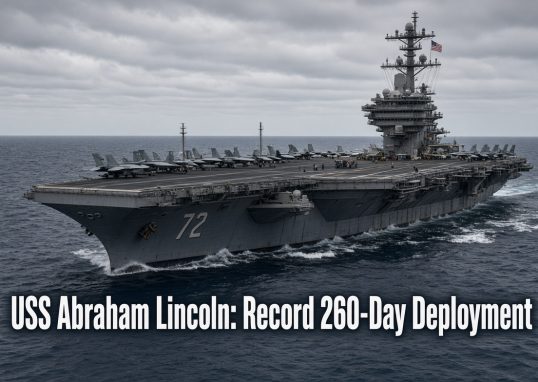
USS Abraham Lincoln Faces Shortages After Record 260-Day Deployment
- 0
- 1,243 word
Families report food, soap, and plumbing shortages on the USS Abraham Lincoln after 260 days at sea. Officials push back as the...
- 260 days at sea
- Abraham Lincoln shortages
- carrier crew conditions
- combat carrier life
- Cooper visits Lincoln
- families raise alarm
- George Washington relief
- Hegseth response
- long deployment toll
- moldy showers ship
- Navy food reports
- Navy logistics challenges
- sailor mental health
- supply chain strain
- veteran pushes back
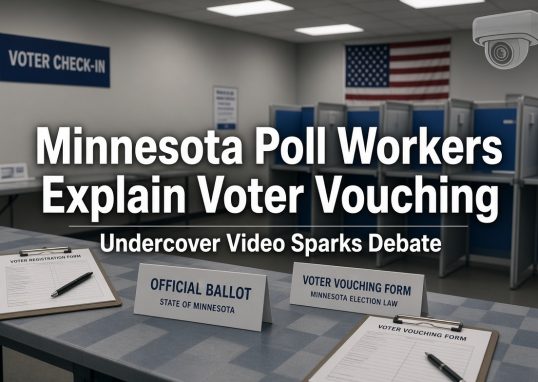
Minnesota Poll Workers Explain Voter Vouching in Undercover Video
- 0
- 1,390 word
Undercover footage captures Minnesota poll workers explaining how one registered voter can vouch for up to eight others. See official response and...
- Cam Higby burqa polling place
- election day vouching explained
- election security debate 2026
- false oath felony
- hidden camera Minnesota
- how vouching actually works
- Minneapolis primary undercover
- Minnesota poll workers video
- O’Keefe exposes vouching
- rare use of vouching data
- reform after video release
- SAVE America Act push
- Secretary of State reacts
- voter vouching loophole claim
- you’re the ID clip